
Take control of your money by learning how cash flows in and out of your life. Then make a simple plan that fits your goals.
A clear budget shows where your money goes, frees up cash for what matters, and protects you when surprises hit.

Start by checking your income, bills, and spending for one month. That way, you’ll know exactly what needs to change.
Small shifts—tracking expenses, setting a savings target, or paying down high-interest debt—add up fast. Over time, those habits make bigger goals like retirement or a home possible.
Key Takeaways
- Know where your money comes from and where it goes to make better choices.
- Build a budget that protects you and funds your short- and long-term goals.
- Track spending, save for emergencies, and cut costly debt to stay on course.
Understanding Cash Flow and Why Budgeting Matters
See exactly how money moves in and out of your accounts so you can meet bills, save, and avoid surprises. Clear tracking and a simple plan let you control daily spending and prep for bigger goals.
Defining Cash Flow in Personal Finance
Cash flow is the money you get and the money you pay out over time. That includes paychecks, side-hustle earnings, benefits, and any interest or rental income.
Outflows cover rent, groceries, loan payments, utilities, subscriptions, and taxes. Track cash flow weekly or monthly.
List each income source and each regular expense. Note when money comes in and when bills are due—a paycheck on the 1st but a mortgage on the 5th can cause a short-term gap.
Positive cash flow means you bring in more than you spend. Negative cash flow means you need to cut costs, earn more, or dip into savings.
Use a spreadsheet, app, or just a notebook. The goal is clarity: know exact amounts and dates so you avoid overdrafts and can plan savings.
The Importance of Budgeting for Financial Security
A budget turns cash flow info into a plan. It assigns each dollar a job: bills, food, transport, emergency savings, debt paydown, and long-term goals.
When you budget, you reduce stress because you know how you’ll cover rent, utilities, and unexpected expenses. Build an emergency fund of 3–6 months of essentials.
That gives you breathing room if income drops or a big bill appears. Use the budget to steer extra money toward high-interest debt first, then toward retirement or investing.
Keep the budget simple and review it monthly. Adjust categories when your income changes or life throws something new at you.
Common Budgeting Myths Debunked
Myth: Budgeting is only for people with no money. Nope. Everyone benefits because budgeting helps you prioritize and reach goals faster.
Myth: Budgets are rigid and suck the fun out of life. Not really. A good budget includes a “fun” or discretionary line so you can spend without guilt.
Myth: You must track every single penny. You don’t have to. Focus on big categories: housing, transport, food, debt, savings.
Myth: Budgeting equals deprivation. Actually, budgeting equals choice. You decide where money goes, instead of letting bills and impulse buys decide for you.
Assessing Your Current Financial Situation
You need a clear snapshot of what you earn, what you owe, and what you own. That helps you make a realistic budget, spot risks, and find money to save or invest.
Identifying Income Sources and Side Hustles
List every income source and record after-tax amounts you actually receive each month. Include wages, freelance pay, rental income, dividends, and any side hustle money.
For irregular income, calculate a 12-month average so your budget stays steady. Track income frequency and reliability.
Note which sources are stable (like a salaried job) and which are variable (like gig apps or freelance work). Mark expected dates and amounts for recurring payments so you can plan bills and savings.
Consider tax and benefits effects. If a side hustle bumps up your taxable income, estimate extra taxes and how it might impact your credit score checks for loans.
Keep separate records for business expenses to simplify taxes and keep your net take-home accurate.
Evaluating Assets, Liabilities, and Net Worth
Make a simple table of assets and liabilities to calculate net worth.
- Assets: checking, savings, retirement accounts, investments, car value, and other property.
- Liabilities: credit cards, student loans, auto loans, mortgage, and outstanding medical bills.
Assign current market values to assets and current balances to liabilities. For liquid accounts, use exact balances; for investments, use recent statements.
Subtract total liabilities from total assets to get your net worth. Also, record interest rates and minimum payments for each debt.
High-rate credit card balances hurt cash flow and raise costs fast, so note them first when planning paydown. Check your credit score—it affects loan rates and refinancing options.
Setting Personal Financial Goals
Set clear targets for what you want to achieve with your money and when you want to reach them. Break goals into specific steps, assign dollar amounts, and give each a deadline so you can track progress and adjust as needed.
Short-Term Goals vs Long-Term Goals
Short-term goals usually take less than two years. Examples: build a $1,000 emergency fund, pay off a $2,500 credit card balance, save $300 for a new laptop.
List each goal with a cost and a target date. Use automatic transfers or a dedicated savings account to keep money separate and avoid spending it.
Long-term goals take more than two years and often need steady investing. Examples: save $50,000 for a down payment, fund a child’s college, or build $500,000 for retirement.
Estimate how much you must save monthly and pick accounts that match the time horizon. Revisit goals yearly and adjust for income changes, inflation, or life events.
Prioritizing Financial Freedom and Stability
Decide what matters more right now: monthly stability or long-term freedom. Stability means having 3–6 months of living expenses, manageable debt, and predictable cash flow.
Prioritize an emergency fund and high-interest debt repayment if your cash flow is tight. Financial freedom means having choices: retiring when you want, taking lower-paying work you enjoy, or weathering big expenses without stress.
To move toward freedom, funnel extra cash into retirement accounts, investments, and taxable brokerage accounts after you secure stability. Use a simple priority list:
- Emergency fund: 3–6 months of expenses
- High-interest debt: target and eliminate balances >8–10% APR
- Retirement accounts: max or contribute regularly
- Other goals: house down payment, education, travel
Track progress monthly and shift funds between priorities as your situation changes.
Creating and Maintaining Your Budget
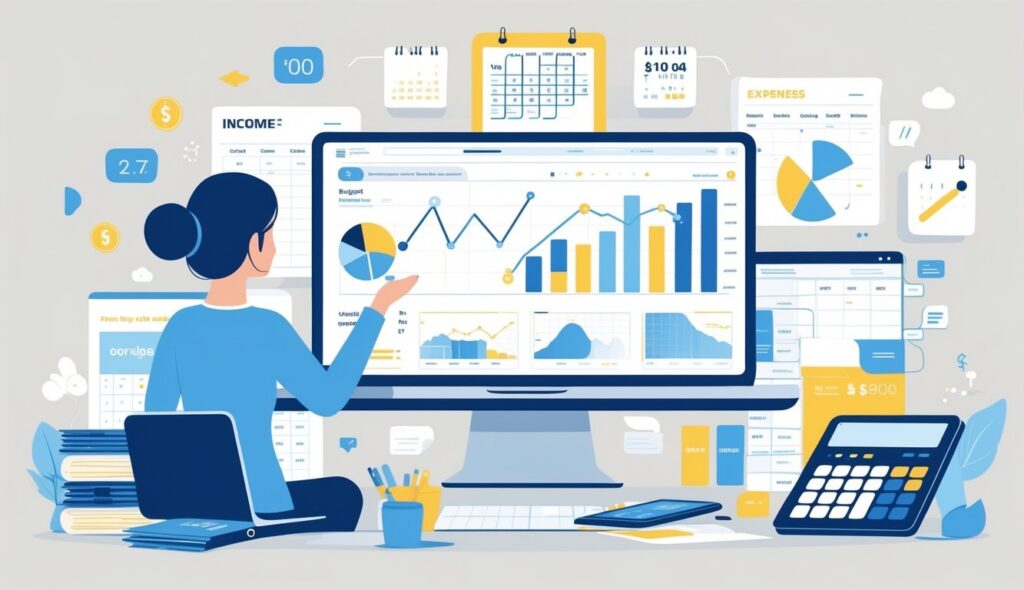
Decide how you’ll track money, plan for timing gaps, and choose tools to keep the plan working. Focus on one clear method.
Watch your cash inflows and outflows, and use an app or spreadsheet that you’ll actually open each week.
Selecting the Right Budgeting Method
Pick a method that fits your income style and goals. If your pay is regular, use the zero-based method: list every dollar and assign it a job (bills, savings, spending).
If income varies, use a percentage plan: set fixed shares for essentials, debt, and savings based on average monthly earnings. Keep categories simple and specific.
Essentials (rent, utilities, groceries), debt payments, short-term savings (emergency, car), and flexible spending work well. Review totals monthly and adjust after life changes.
Use a short checklist when you create a budget: calculate average monthly income, list fixed and variable expenses, set saving targets, and assign every dollar. Revisit weekly for cash flow gaps and monthly to update targets.
Cash Flow Budgeting Techniques
Cash flow budgeting watches timing, not just totals. Map when money arrives and when bills are due so you avoid shortfalls.
Create a calendar that shows paydays, rent, loan payments, and expected irregular costs like quarterly taxes. Build a one- to three-month cash buffer to cover timing mismatches.
If you run a surplus in a high-income month, move extra to a buffer instead of increasing spending. For variable income, base spending on a conservative monthly average and treat extra as bonus money.
Track net cash flow each period: inflows minus outflows. If negative, cut variable costs or delay discretionary buys. If positive, boost emergency savings or pay down high-interest debt.
Budgeting Apps and Digital Tools
Choose tools that match your comfort and the method you use. For simple category tracking, use a spreadsheet or basic app with manual entry.
For automated tracking, pick an app that links to your accounts and categorizes transactions. Look for features like transaction syncing, bill reminders, a cash flow calendar, and goal tracking.
If you create a cash flow budget, use an app that shows upcoming inflows and outflows by date, not just monthly totals. Try any app for one month before you commit.
Enable two-factor authentication and use strong, unique passwords. Keep a local backup of key figures—export CSV or save screenshots—so you can rebuild your budget if an app ever fails.
Tracking and Categorizing Expenses Effectively
You’ll learn concrete steps to record every purchase, sort spending into clear groups, and stop the small habits that eat your cash. Simple tools and regular checks help you keep control.
Expense Tracking Strategies
Pick one tracking method and stick with it. Use a budgeting app that links to your bank for automatic records, or keep a spreadsheet with columns for date, payee, amount, and category.
If you prefer paper, jot every purchase in a small notebook and enter totals weekly. Set a routine: reconcile accounts once a week and review all receipts on the same day.
Automate recurring items like rent, utilities, and subscriptions so you never forget them. For cash purchases, snap a quick photo of the receipt and add it to your app or spreadsheet the same day.
Aim to record every transaction for at least one month. That gives you a reliable baseline to build your budget and spot patterns.
Understanding and Categorizing Expenses
Start with three core categories: Needs (housing, utilities, groceries), Wants (dining out, entertainment, subscriptions), and Savings/Debt (emergency fund, loan payments).
Create subcategories in each to track specifics, like groceries vs. eating out, or gas vs. public transit.
Stick to consistent labels. If you call coffee “dining out” sometimes and “small purchases” other times, your totals get confusing.
Check category totals every couple of weeks. If you notice recurring items in the wrong place, update the labels.
Spot big monthly fixed costs first. Then look at your variable spending.
Flag one-time or irregular expenses—car repairs, medical bills—so they don’t mess up your usual monthly picture.
Avoiding Overspending Habits
Figure out your impulse buy triggers. Email sales, social media ads, or just plain boredom get most people.
When you feel like buying on a whim, wait 24 hours. If you still want it, double-check if it fits your budget.
List every subscription and its monthly cost. Cancel the ones you haven’t touched in 30 days.
Set spending caps for flexible categories like dining out and entertainment. Check your progress every week.
Try simple tactics: carry only one payment card, unsubscribe from promo emails, and set app alerts as you near your limits.
These little changes help keep overspending in check and your totals honest.
Prioritizing Savings and Building an Emergency Fund
Pick a savings target and make saving automatic. Keep your emergency fund liquid and don’t touch it unless it’s a real emergency.
Why You Need an Emergency Fund
An emergency fund covers surprise but necessary costs—car repairs, medical bills, or a sudden loss of income.
Shoot for 3 months of essential living expenses if your job is steady, or 6 months if things are less stable, you’ve got dependents, or you run a business.
Figure out your essentials: rent or mortgage, utilities, groceries, insurance, and debt minimums.
Park this money in a high-yield savings account or a money market account so you can get at it fast, no penalties.
Label the account clearly and keep it separate. Don’t use it for vacations or wants—only for true emergencies.
Automating Savings for Consistency
Set up an automatic transfer from each paycheck to your emergency fund. Make it a recurring thing, so you don’t have to think about it.
If your income is unpredictable, save a percentage—say, 10%—whenever money comes in.
Use tools like bank auto-transfer, direct deposit split, or a savings app that rounds up your purchases.
Tweak the amount after big life changes or at least once a year.
Automating makes saving less tempting to skip and keeps you on track, even if you’re not always paying attention.
Managing Debt Repayment Within Your Budget
Focus on high-interest balances first, pick a clear payment plan, and use a simple payoff method that helps you keep going.
The goal is to cut interest and free up more cash each month.
Addressing High-Interest Debt
List every debt, its interest rate, and minimum payment. Put credit cards and payday loans with the highest APRs at the top.
High-interest debt grows fast, so pay more than the minimum whenever you can.
Cut back on nonessentials and send that money to your highest-rate debt.
If possible, transfer a high-rate balance to a lower-rate card with a 0% intro or use a personal loan with a better APR—but always check for fees and what happens after the intro period.
Keep at least $500–1,000 in emergency savings so you don’t rack up new debt while paying things down.
Strategies for Paying Off Credit Cards and Loans
Pick a plan and stick with it. Always pay at least the minimum on every account to dodge penalties.
Send any extra cash to your main target debt each payday.
Here’s a quick checklist:
- Automate minimum payments to avoid late fees.
- Throw windfalls (raises, tax refunds) at your priority debt.
- Update your payoff plan if rates change.
For student loans, look into income-driven or forgiveness options before making big extra payments.
Don’t skip secured loan payments—you risk losing your car or home.
The Snowball Method Explained
The snowball method has you pay off the smallest balance first, while making minimums on the rest.
When you clear a small debt, roll that payment into the next smallest balance.
This gives you quick wins and keeps you moving.
Example:
- Card A: $300, min $25
- Card B: $1,200, min $35
- Loan C: $5,000, min $100
Pay extra on Card A till it’s gone, then add that payment to Card B.
Track your progress with a simple table—balance, interest rate, minimum, extra payment—and update it weekly.
This method helps you stay motivated, even if a higher-rate debt takes longer.
Achieving Long-Term Financial Success
Build habits that protect your money and help you grow your net worth.
Focus on steady retirement savings, smart retirement planning, and a budget that actually fits your bigger goals.
Planning for Retirement Savings
Estimate how much you’ll need by guessing your retirement age, yearly spending, and income like Social Security or a pension.
Use a target replacement rate—usually 60–80% of what you make now—to set your savings goal.
Start with tax-advantaged accounts. Put money into your employer’s 401(k) up to any match, then max out IRAs if you can.
If you’ve got high-interest debt, balance paying it down with steady retirement contributions.
Automate your contributions and bump them up when you get a raise.
Rebalance your investments once a year so your risk matches your age.
Keep tabs on your progress with a spreadsheet or an app that shows your balance, yearly contributions, and future projections.
Integrating Budgeting into Financial Planning
Let your budget be the backbone of your financial plan.
List out fixed costs, debts, and savings goals. Assign each dollar a job so every paycheck has a purpose.
Tie your budget categories to real goals—emergency fund, retirement, debt payoff.
Use the 50/30/20 rule as a starting point, but tweak the percentages to hit your targets faster if you want.
Review your budget every month and after big life changes—new job, new baby, medical bills.
Use budgeting tools that sync with your accounts to make life easier and give you clear reports for planning.
Frequently Asked Questions
Here are some practical answers you can use right away: how to start a budget, ways to track your money, practical cuts to spend less, how budgeting links to goals, how to rank expenses, and which apps can help.
What are the fundamental steps to start budgeting my finances?
List all your income sources first. Include paychecks, side jobs, and regular transfers.
Write down your fixed monthly bills next—rent, loans, insurance.
Then list variable costs like groceries, gas, and entertainment.
Set a realistic savings target—maybe 10% of your income—and treat it like a bill.
Adjust your spending categories until your income covers bills, savings, and a bit of wiggle room.
How can I effectively track my income and expenses?
Track every transaction for a month to spot your real habits.
Use a notebook, a spreadsheet, or an app to log amounts, dates, and categories.
Compare what you actually spend to your plan each week.
Watch out for recurring charges like subscriptions and fix mistakes quickly.
Check your bank and card statements every month to catch anything you missed.
Make sure your records match your bank balances.
What strategies can I use to reduce unnecessary spending?
Pause or cancel subscriptions you barely use. Start with streaming, software, and gym memberships.
Set caps for categories like eating out or shopping. Try cash envelopes or app limits to stick to them.
Wait 24–48 hours before making impulse buys to see if you still want the item.
Buy generic brands for basics and look for sales on planned purchases.
In what ways can budgeting help me achieve my financial goals?
Budgeting shows you how much you can save each month for goals like an emergency fund, a car, or a house down payment.
It breaks big goals into bite-size monthly targets.
It also helps you prioritize debt payoff by freeing up cash from cut categories.
Tracking progress makes it easier to tweak your plans if life changes.
How should I prioritize my expenses when creating a budget?
Cover essentials first—housing, utilities, food, and transport.
Make minimum debt payments next to avoid fees and credit hits.
Build a small emergency fund ($500–$1,000) before spending extra on wants.
Then put money toward savings goals and extra debt payments.
Only fund flexible stuff like entertainment after you’ve covered the basics and savings.
Can budgeting tools and apps improve my money management, and what are some recommended options?
Absolutely, they can help. Budgeting tools automate tracking and highlight spending trends.
Some even send you alerts if you start overspending. If you just want to keep things simple, a spreadsheet or a basic app like EveryDollar or Goodbudget might do the trick.
Want something with more automation? Mint, YNAB (You Need A Budget), and Personal Capital link to your accounts and give you deeper insights. Honestly, it comes down to how involved you want to be.