
Carrying multiple debts at the same time is one of the most stressful financial situations a person can face. You have credit card balances, maybe a car loan, possibly some medical bills, and the minimum payments alone feel like they barely make a dent.
The good news is that two straightforward payoff strategies, the debt snowball and the debt avalanche, have helped millions of people cut through exactly this kind of chaos.

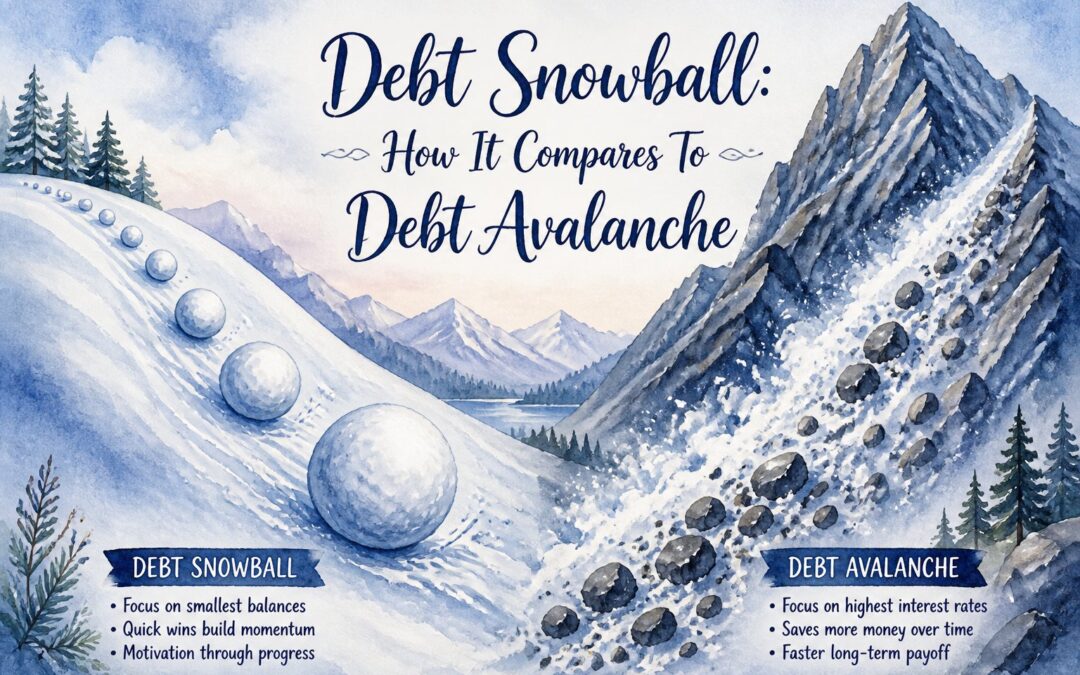
Both methods give you a clear order for attacking your debts, and simply having that order is often the thing that gets people moving. The snowball focuses on your smallest balances first to create quick wins.
The avalanche targets your highest interest rates first to reduce what you pay over time. Neither is universally better; the right one is the one you will actually follow through on.
Read on, and you will have everything you need to pick your path and take your first real step toward debt-free living.
For more plain-English guidance on budgeting, saving, and building financial confidence, Make, Save & Spend Money is a solid place to keep exploring.
How The Snowball Approach Works

The debt snowball method, popularized by Dave Ramsey, is built around a simple idea: pay off your smallest balance first, then roll that freed-up payment into the next one. It ignores interest rates entirely and focuses on reducing the number of debts you carry as fast as possible.
List Debts From Smallest To Largest Balance
Write out every debt you owe, from the smallest balance to the largest. This might look like a $400 medical bill, a $1,200 credit card, a $6,000 car loan, and a $15,000 student loan.
The order you write them in becomes your debt snowball plan, and you work through the list from top to bottom.
Make Minimum Payments On Everything Else
Every month, you make the minimum monthly payment on all your debts except the one at the top of your list. This keeps your accounts in good standing while you concentrate extra payment dollars on your smallest balance.
You are not ignoring your other debts; you are just not throwing extra money at them yet.
Roll Each Freed-Up Payment Into The Next Balance
Once your smallest debt hits zero, you take everything you were paying on it, the minimum payment plus any extra you were adding, and add it to the minimum payment on the next balance. Each time a debt disappears, your available payment amount grows.
That is the snowball effect in action: the momentum builds with every balance you knock out.
Why Quick Wins Help Build Momentum
Paying off a small debt in a few months gives you a concrete, tangible result. That kind of early success matters more than most people expect.
When you eliminate even a small balance, you have fewer open accounts to worry about, less mental load, and a real sense of forward motion. For people who have struggled to stick with a debt payoff plan in the past, those quick wins can be the difference between staying committed and giving up before the bigger balances get touched.
How The Avalanche Approach Works

The debt avalanche method takes a math-first approach to paying off debt. Instead of organizing debts by balance size, you rank them by annual percentage rate, targeting the most expensive debt first to reduce the total interest you pay across your entire repayment period.
Rank Debts By Highest Interest Rate First
List all your debts from the highest APR to the lowest. A credit card at 24% APR goes to the top even if it has a larger balance than a personal loan at 9%.
The ranking is purely about interest rate, not how much you owe or how long you have been carrying the balance.
Keep Minimums Current While Targeting One Debt
As with the snowball, you make minimum payments on every debt in your list except the one in the number one spot. Any extra money goes entirely toward that high-interest debt.
Once it is paid off, you redirect those funds to the next highest rate on your list.
How APR Affects Total Interest Paid
A high APR means a larger share of each monthly payment goes toward interest rather than reducing your actual balance. A credit card at 22% APR with a $3,000 balance costs significantly more over time than a car loan at 6% with the same balance.
By eliminating the high-interest debt first, the avalanche method stops that expensive interest from compounding for as long. Over months or years, that can add up to hundreds or even thousands of dollars saved.
Why This Method Appeals To Numbers-Driven Planners
If you are the type of person who runs the numbers, compares totals, and wants to optimize your debt payoff method for the lowest possible cost, the avalanche approach tends to feel satisfying. You can see on a spreadsheet or calculator exactly how much less you will pay compared to paying randomly.
The tradeoff is that the first debt on your list might take a long time to disappear, especially if it is a high-balance, high-rate account. That delay can feel discouraging for people who need visible wins to stay motivated.
Pros And Cons Of Each Strategy
Choosing between the two methods is really a question of what keeps you going. Both strategies work when followed consistently, but they have real differences in how they feel day to day and what they cost over the full repayment timeline.
Where Snowball Can Be Easier To Stick With
The biggest advantage of the snowball is psychological. When you eliminate a debt entirely, even a small one, you feel accomplished.
That feeling reinforces the behavior. You are less likely to abandon the plan because you have visible, frequent proof that it is working.
For people who have given up on debt payoff plans before, this structure can be genuinely transformative.
Where Avalanche Can Save More Money
The avalanche method almost always reduces the total interest you pay compared to the snowball. When high-interest debt is allowed to sit while you tackle smaller, cheaper balances first, that interest compounds.
Paying off your most expensive debt first cuts that compounding off sooner. Depending on your debt mix, the savings can be significant.
Tradeoffs In Motivation, Cost, And Timeline
| Factor | Snowball | Avalanche |
|---|---|---|
| Interest savings | Lower | Higher |
| Speed to first payoff | Faster | Slower (possibly) |
| Motivation boost | Strong, frequent | Delayed, but consistent |
| Math complexity | Simple | Slightly more involved |
| Best for | Behavior-driven payoff | Cost-conscious payoff |
When Either Method Can Backfire
Both approaches can stall if your budget does not actually have room for extra payments. Paying only the minimum monthly payment on every debt while hoping something changes is not a plan; it is treading water.
Either method also struggles if you keep adding new debt, such as continuing to use the credit card you are trying to pay down. The strategy is only as strong as the habits supporting it.
Which Option Fits Your Money Personality
Your debt mix matters, but your personality matters just as much. A plan that is mathematically perfect but hard to follow is less effective than a slightly less efficient plan you actually stick with.
Think about your history with financial goals and what has worked, or not worked, before.
Best For Readers Who Need Early Motivation
If you have tried to pay off debt before and lost steam, the snowball is worth a serious look. It is especially effective when you have several smaller accounts: a medical bill, a store credit card, or a small personal loan sitting alongside larger balances.
Eliminating those first gives you fewer accounts to manage and a psychological boost that helps you push through the harder, longer payoffs ahead.
Best For Readers Focused On Interest Savings
If you are carrying high-APR credit card debt and you can stay disciplined even when progress feels slow at first, the avalanche will likely save you real money. It works particularly well when one or two debts have dramatically higher interest rates than the rest of your list.
The savings justify the wait if you can stay committed without needing frequent small victories.
How To Choose If Your Debt Mix Is Complicated
Some readers are dealing with student loans, car loans, medical bills, and credit card debt all at once. When your debt mix includes a variety of balances and interest rates, the choice is less obvious.
One practical approach is to look at whether any of your small balances also carry high interest rates. If a small credit card balance also has a 25% APR, paying it off first satisfies both methods.
When the smallest and most expensive debts align, you get quick wins and interest savings at the same time.
A Simple Side-By-Side Decision Snapshot
- Choose snowball if: You need motivation fast, have several small accounts to eliminate, or have quit debt payoff plans before due to feeling stuck.
- Choose avalanche if: You are disciplined, comfortable playing a longer game, and want to minimize what you spend on interest.
- Consider starting with snowball and shifting: Some people knock out a few small debts first to build confidence, then pivot to avalanche once the momentum is rolling. That hybrid approach is completely valid.
Your credit score is not directly affected by which method you choose. What matters for your credit is that you keep accounts current, reduce balances over time, and avoid opening new debt you do not need.
Ways To Speed Up Your Payoff Plan
Choosing a method is only part of the picture. The faster you can apply extra payments to your debt, the sooner you get out.
There are several practical ways to accelerate your progress without completely overhauling your life.
Use Budgeting To Find More Debt Money
A careful look at your monthly spending usually reveals room you did not think existed. Even an extra $50 or $75 a month applied consistently to your target debt can shorten your timeline by months.
Budgeting apps and simple spreadsheets can help you see where money is going and redirect some of it toward debt payoff. The goal is not to build a perfect budget overnight; it is to find one or two spending categories you can trim without making life miserable.
Add Income With A Side Hustle
Extra income is one of the most direct ways to add extra payments without cutting everything from your current lifestyle. Freelance work, gig platforms, selling unused items, or picking up occasional project-based work can generate meaningful cash that goes straight to your snowball or avalanche target.
Even a few hundred extra dollars a month can make a noticeable difference in how quickly your balances shrink.
Protect Progress With A Small Emergency Fund
One of the most common reasons debt payoff plans unravel is an unexpected expense. A car repair or medical copay that you have no savings to cover often ends up charged to a credit card, adding new debt just as you are making progress.
A small emergency fund of even $500 to $1,000 acts as a buffer that keeps you from backsliding. Dave Ramsey’s Baby Steps framework actually recommends building this buffer before starting the debt snowball.
When Debt Consolidation Or Credit Counseling May Help
If your interest rates are very high across multiple accounts, debt consolidation through a personal loan at a lower rate may reduce your total monthly obligation and simplify your plan into a single payment.
Credit counseling organizations can also help you negotiate lower rates or set up a structured repayment plan if you feel too overwhelmed to manage it alone. These options are not right for everyone, but they are worth exploring if your current rates are making it nearly impossible to get traction.
How To Start Today Without Overcomplicating It
The hardest part of paying off debt is often just starting.
Once you have your numbers in front of you and a clear first step, the process becomes much less intimidating.
You do not need a complex system; you need a few pieces of information and a commitment to follow through.
Gather Balances, Rates, And Minimums
Pull up each account you owe and write down three numbers: the current balance, the interest rate (APR), and the minimum monthly payment.
That is your full debt picture.
Knowing these numbers gives you everything you need to build either a snowball or avalanche plan.
If you have not looked at all your balances in one place recently, this step alone can be clarifying.
Choose One Method And Set Automatic Payments
Pick the approach that fits your personality based on the decision framework above.
Set up automatic minimum payments on every account except your target debt.
Automating your minimums means you will not accidentally miss a payment while focusing extra attention elsewhere.
Once automation is in place, direct any extra cash you have each month to your number one target.
Track Progress With A Debt Snowball Calculator
A free debt snowball calculator lets you enter your balances, interest rates, and minimum payments and then shows you a month-by-month payoff schedule.
Seeing a projected payoff date on your smallest balance makes the plan feel real and achievable.
Many calculators also let you enter an extra monthly payment amount so you can see exactly how much faster you become debt-free when you add even a small amount above the minimum.
Review Your Plan As Interest And Cash Flow Change
Your amortization schedule and payoff timeline will shift if your income changes, if you receive a windfall, or if an interest rate adjusts.
Review your debt repayment plan every few months to make sure it still reflects your real numbers.
If you paid off a balance early or picked up extra income from a side hustle, update your target payment and recalculate.Emergency Fund Guide: Formula, Savings Tips, Trackers, & MoreCompound Interest Explained: How to Make Your Money Grow Faster50/30/20 Rule: The Simple Budgeting Method for Financial FreedomHow to Create a Budget That Actually Works: Step-by-Step Guide