
You can protect your finances from sudden bills, job loss, or big repairs by keeping a dedicated stash of cash for true emergencies. Building that cushion takes simple steps you can start today.
It keeps you from using high-interest credit or tapping retirement savings when something unexpected happens.
This handbook shows exactly how much to aim for and where to keep your money so it stays safe and accessible. It also walks through easy ways to grow the fund without upending your budget.
Key Takeaways
- Save a practical amount that covers several months of essential expenses.
- Keep emergency money in a safe, easy-to-access place that still earns interest.
- Build the fund with regular, automated savings and avoid using it for non-emergencies.
What Is an Emergency Fund?

An emergency fund is a dedicated pool of cash you keep for real, unexpected costs. It protects your monthly bills, health needs, and basic living expenses when something sudden happens.
Definition and Purpose
An emergency fund is money you set aside in a liquid account for unplanned, urgent expenses. You keep it separate from checking and everyday savings so you don’t touch it for routine purchases.
Aim to cover essentials like rent or mortgage, utilities, groceries, and insurance for a set period—commonly 3–6 months of those costs. The main purpose is to avoid taking on high-interest debt or tapping retirement accounts when trouble hits.
It gives you time to find a new job after a layoff or pay a medical bill without skipping treatments. Fixing a car you rely on for work is another example. Treat this as a safety net, not extra spending money.
Types of Emergencies Covered
Your emergency savings should cover true emergencies that affect your ability to meet basic needs or keep income steady. Examples include:
- Job loss or sudden drop in income
- Emergency medical bills or urgent dental work
- Major car repairs that stop you from working
- Home repairs that affect safety or habitability (roof leaks, broken furnace)
Keep funds in a high-yield savings or money market account for quick access and some interest. Size the fund based on your monthly essential expenses and how stable your income is.
If you have variable income, aim higher—4–6 months or more.
What Does Not Qualify as an Emergency
Don’t use your emergency fund for wants or planned costs. These are not true emergencies:
- Vacations, new gadgets, or luxury purchases
- Regular home upgrades or non-urgent car improvements
- Paying off discretionary debt like store credit used for shopping
- Investment opportunities or short-term market plays
Skip using it for minor, planned expenses you can budget for. If you tap the fund for something that isn’t a genuine emergency, replenish it quickly.
Keep rules for yourself so the fund remains ready for real financial emergencies.
Why You Need an Emergency Fund

An emergency fund gives you a practical money buffer that helps you handle sudden bills and protect your paycheck. It also helps you avoid costly borrowing.
It keeps your basic needs covered and helps you make clear choices when something unexpected happens.
Financial Security and Peace of Mind
A dedicated emergency fund creates real financial security. When you have a cash reserve, you can pay for a car repair, medical bill, or broken appliance without touching other accounts.
That reduces stress and helps you sleep better at night. Keep the fund in a safe, accessible place like a savings account so you can use it quickly.
Aim for an amount you can actually live on for a short time, not a number that feels impossible. Watching the balance grow also improves your overall financial wellness.
Avoiding High-Interest Debt
Using credit cards or payday loans for surprises can cost you hundreds in interest and fees. An emergency fund lets you pay cash instead of adding new debt.
High-interest debt often takes years to pay off and makes it harder to save. Even a small cushion—just a few hundred dollars—cuts the chance you’ll turn to a high-cost loan.
That keeps more of your money working for you and protects your credit score.
Job Loss and Income Protection
Losing income is one of the hardest shocks to handle. An emergency fund gives you job loss protection by covering rent, utilities, and food while you look for work.
Most experts suggest saving enough to cover basic living costs for several weeks to a few months. If your pay varies, aim for a larger cushion.
This safety net keeps you from dipping into retirement accounts or selling investments at a bad time.
How Much Should You Save?
Decide a clear emergency fund goal based on the costs you must cover, not on vague rules. Know your monthly essentials, pick a realistic target range, and use a calculator to test scenarios and timelines.
Calculating Essential Living Expenses
List the expenses you must pay each month if income stops. Include rent or mortgage, utilities, groceries, insurance premiums, minimum debt payments, transportation, and basic phone or internet.
Skip non-essentials like streaming services, dining out, or hobby costs. Add one-time or irregular essentials too, such as annual insurance deductibles or car registration.
Use your last three months of bank and card statements to get exact numbers. Round up to avoid underestimating—if totals vary, use the highest monthly total as your baseline.
Think about dependents and special needs. If you support children, elderly family members, or have ongoing medical costs, include those amounts.
That gives you your “bare-bones” monthly figure to multiply for your fund target.
Setting Realistic Savings Targets
Start with a practical range. Many experts suggest 3 to 6 months of your bare-bones monthly expenses.
If your job is unstable, aim for 6 to 12 months. If you have multiple income streams or strong unemployment benefits, 3 months may be enough.
Convert the months into a dollar target. Example: if your essential expenses are $2,000/month, a 3-month goal is $6,000 and a 6-month goal is $12,000.
Break the target into smaller milestones—$500, $1,000, then $2,500—to keep progress visible. Automate regular transfers to hit those milestones faster.
If you can save $200 a month toward a $6,000 goal, you’ll reach it in 30 months. Increase contributions with raises or by cutting non-essentials to shorten the timeline.
Using an Emergency Fund Calculator
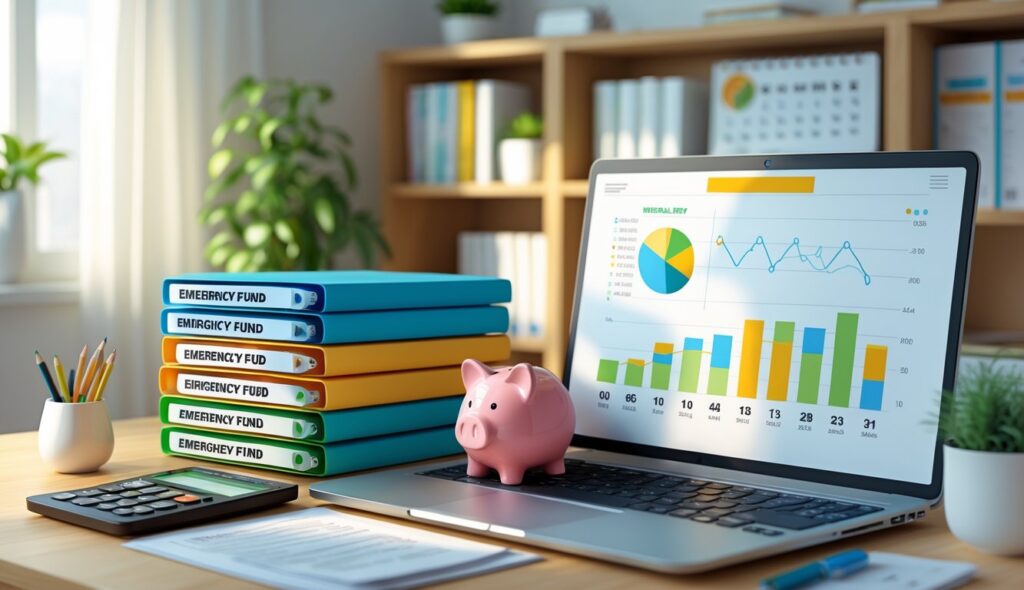
An emergency fund calculator lets you plug in your essential monthly expenses, desired months of coverage, and current savings. It shows the total goal and the monthly or weekly deposits needed to reach it by a chosen date.
Choose a calculator that lets you add expected interest from a high-yield savings account and one-time contributions like tax refunds. Compare scenarios—3 months vs. 6 months—to see how much more you must save each month for each goal.
Use the results to set a clear action plan. If the monthly required deposit is too high, adjust the timeline or find small budget changes to increase savings.
Keep the calculator results saved so you can update them when your expenses or income change.
Where to Keep Your Emergency Fund
Keep your emergency money where you can get it quickly, keep it safe from loss, and earn a bit of interest. Choose an account that fits how often you might need cash and how much risk you accept.
High-Yield Savings Accounts
High-yield savings accounts (HYSAs) offer much better interest than typical bank savings. You can open one at an online bank or credit union and often earn several times the national average.
Look for APY, fees, and whether interest compounds daily or monthly. Keep enough in the HYSA for mid-term access—the bulk of a 3–6 month emergency fund works well here.
HYSAs are FDIC- or NCUA-insured up to $250,000, so your principal is protected. Avoid accounts with monthly maintenance fees or high minimum balances that cut into interest.
Use online transfers and mobile apps to move funds fast. If you need immediate cash, link the HYSA to a checking account for same-day transfers or use the bank’s debit feature if offered.
Money Market Accounts
Money market accounts (MMAs) blend checking features with higher yields. They often let you write checks or use a debit card while still paying competitive APYs.
Compare ATM access, transaction limits, and minimum balance rules before you choose one. MMAs are also typically FDIC- or NCUA-insured.
They work well if you want quick access but also want to earn interest similar to HYSAs. Watch for tiered rates where higher balances earn better APYs—sometimes that can really add up.
If you value liquidity and occasional check writing, use an MMA for part of your emergency fund. Keep a small liquid buffer in checking and put the rest in the MMA to earn more while staying accessible.
Dedicated and Separate Savings Accounts
A dedicated or separate savings account means a distinct account used only for emergencies. This prevents accidental spending and makes tracking progress easier.
You can do this at your main bank or open a new account at another institution. Label the account clearly (for example, “Emergency — 6 Months”) and automate transfers from checking each payday.
Automation grows the fund without thinking. Keep at least one month’s worth of expenses in a linked checking account for instant needs, and the rest in the separate savings to reduce temptation.
Consider splitting funds across a HYSA and an MMA for both yield and access, but keep the accounts clearly separate from daily spending accounts. This setup enforces discipline and keeps your emergency money available when you need it most.
How to Build an Emergency Fund
You can take practical steps to free up money, move it automatically, and treat saving like a bill. These actions make saving steady and simple so your fund grows without extra effort.
Budgeting and Cutting Expenses
Start by listing all monthly income and fixed bills on one page. Include rent, utilities, subscriptions, loan payments, and groceries.
Subtract total expenses from income to find how much you can save each month. Look for specific cuts: cancel unused subscriptions, switch to a cheaper phone plan, cook at home three nights a week, and set a weekly grocery limit.
Aim to trim 5–15% of your monthly spending. Put the saved amount toward your emergency fund.
Use a simple tracking method—a spreadsheet or an app that shows spending by category. Review it every two weeks and adjust limits.
Small, repeated cuts add up faster than rare big changes.
Setting Up Automatic Transfers
Open a separate savings account labeled “Emergency Fund.” Choose a high-yield online or credit-union savings account for better interest and easy transfers.
Set up automatic transfers from your checking to that account right after payday. Start with an amount you can keep, even $25–$50.
Increase transfers when you get raises or reduce debt. Schedule transfers weekly or monthly to match your pay cycle.
Treat transfers like a bill so you don’t skip them. Check the account monthly to confirm transfers posted and adjust if needed.
Pay Yourself First Strategies
Decide on a target amount. Most experts say three months of essential expenses is a good start.
Figure out what counts as essential: rent or mortgage, utilities, food, insurance, and minimum debt payments.
Save first, right after you get paid. Move a set percentage—maybe 5–10%—of each paycheck straight into your emergency fund before you spend anything else.
If you freelance, stash away a slice of every invoice. It’s a little more work, but it pays off.
Got a bonus, tax refund, or surprise cash? Toss it in your fund to give it a boost.
Even small habits matter. Try skipping one coffee out each day and set up automatic micro-transfers to savings. Over time, these choices make building your emergency fund feel almost effortless.
Maintaining and Growing Your Emergency Fund
Keep tabs on your balance, your spending, and how your needs change. Simple tools and routines help your fund stay ready for actual emergencies.
Monitoring Your Progress
Check your emergency fund at least once a month. Record every deposit, withdrawal, and interest payment.
Use a spreadsheet or a budgeting app. A quick chart makes it easy to spot slow growth or surprise dips. See more on spotting trends here.
Set clear targets for yourself. Start with one month’s expenses, then aim for three, then six (or more if your job feels shaky). Mark each milestone and celebrate small wins—hitting 25% is worth a high-five.
Review your risks every few months. If your job or bills change, adjust your savings rate. If interest rates go up, put new contributions in a higher-yield account, but keep funds easy to access.
When to Use and How to Replenish
Dip into your emergency fund only for real emergencies: job loss, big car or home repairs, or urgent medical bills you can’t cover with insurance.
Don’t use it for planned stuff like vacations or upgrades.
When you make a withdrawal, start your replenishment plan right away. Break the replacement amount into fixed monthly transfers. For example, if you take out $1,200 and want it back in a year, set up a $100 transfer each month.
Make replenishing your fund a top priority. Cut back on extras, use tax refunds or bonuses, and automate transfers so you don’t fall behind.
If an emergency drags on, take another look at what you need to feel secure. Adjust your target if it makes sense for your financial wellness.
Adapting to Lifestyle and Income Changes
After big life events—marriage, a child, buying a home, or switching careers—rethink your emergency fund target.
If you take on more monthly bills or lose employer benefits, bump up your goal.
When your income isn’t steady, aim for the high end. Freelancers and commission workers should try for six months or more of essentials. Use a conservative guess for your monthly expenses.
If you pay off a car or mortgage, consider lowering your monthly contributions. Maybe put the extra into retirement or investments, but keep your emergency fund healthy. It’s about matching your savings to your real needs.
Common Mistakes and Alternatives
Let’s talk about what can go wrong with emergency savings and what to do when cash runs short. The focus: cover essentials, replace what you spend, and choose safer backup options if you need to borrow.
Misusing the Fund
Only use your emergency fund for true, unexpected needs—like job loss, major medical bills, or urgent car repairs.
Don’t tap it for recurring bills, vacations, or routine upgrades. Those belong in separate sinking funds or your regular budget.
Mixing goals just makes your target bigger and your protection weaker. For example, if you drain your fund for a new phone, you could get caught off guard by a car repair.
Keep things simple but controlled. Use a high-yield savings or money market account so you can access cash fast, without penalties. Don’t tie up emergency money in investments that take time to sell or might drop in value.
Not Replenishing After Use
When you dip into your emergency fund, make a repayment plan right away. Jot down the amount, date, and reason.
Schedule automatic transfers to restore the balance, aiming for a realistic timeline—anywhere from three to twelve months, depending on how much you used.
If you don’t replenish, you’ll be unprotected for the next shock. Track your progress with a small table or checklist: date, amount, monthly repayment, and when you expect to finish.
If income or bills change, adjust your repayment amount. Can’t refill it fast? Cut extras and pause other savings until your emergency fund is back on track. Use windfalls—tax refunds, bonuses, or side gig money—to refill it first.
Alternatives: Credit Lines and Loans
Credit cards and personal loans can back up your emergency fund, but they’re not the same.
A credit card or home equity line of credit (HELOC) offers flexible access. Personal loans give you a fixed amount and set payments. Always compare interest rates, fees, and repayment terms before using either.
Stay away from payday loans. The fees and interest are sky-high, and you can get stuck in a debt spiral.
If you need short-term cash, look for low-interest personal loans, a reasonable bank overdraft, or a small emergency loan from a credit union.
Use credit as a bridge, not a replacement for savings. If you borrow, plan your repayments quickly to limit interest. Record the balance and set up auto-payments so debt doesn’t get away from you.
Frequently Asked Questions
Here are some straight answers about how much to save, where to keep it, rebuilding after spending it, how to save faster, and when to use your fund.
What is the ideal amount to save in an emergency fund?
Aim for 3 to 6 months of essential expenses if your job feels secure.
If your income is unpredictable, you freelance, or you’ve got high fixed costs, shoot for 6 to 12 months.
Add up your monthly essentials: rent or mortgage, food, utilities, insurance, loan payments, and minimum debts. Multiply by the number of months you want covered.
How can I rebuild my emergency fund after an unexpected expense?
First, figure out how much you used and what’s left.
Set a clear dollar goal to restore the fund to your target.
Automate a fixed transfer from each paycheck into your emergency fund. Cut back on one or two extras (like streaming or takeout) and put that money into savings.
What strategies can help in accumulating an emergency fund more quickly?
Start small with regular, automatic transfers so saving becomes routine.
When you get a raise or pay off a debt, bump up the transfer.
Use windfalls—tax refunds, bonuses, cash gifts—to give your fund a fast boost. Sell stuff you don’t need and add the money to your emergency account.
Should an emergency fund be mixed with other savings or kept separate?
Keep your emergency fund separate from retirement and regular checking accounts.
Use a dedicated high-yield savings or money market account for easy access and clear tracking.
Don’t mix it with long-term investments—those can lose value or take a while to sell, leaving you short in a pinch.
What are typical examples of situations that would warrant use of an emergency fund?
Use your fund for sudden job loss, major medical bills, urgent car repairs, and essential home repairs like a busted water heater.
It’s also there for emergency travel during a family crisis or unavoidable legal fees.
Don’t use it for planned stuff like vacations, new furniture, or regular upgrades. That’s what other savings are for.
How frequently should I contribute to my emergency fund?
Try to put money into your emergency fund every time you get paid, whether your paycheck comes weekly, biweekly, or monthly.
Setting up automatic transfers makes it easier to keep the habit going. That way, you’re less likely to forget or skip a deposit.