
If you’re aiming for a safe spot to let your money grow—without the rollercoaster of stocks or bonds—a high-yield savings account could be your go-to. These accounts usually offer much higher interest rates than the old-school savings accounts, often hovering around 4% or more.
With a high-yield savings account, you get more interest on your cash and can still access it easily. Plus, your money stays federally insured.
High-yield savings accounts make your money work harder, and you barely have to lift a finger. Unlike CDs or money market accounts, you can usually take out funds as needed and still earn a solid return.
It’s all about finding the right fit—look at fees, minimum balances, and customer service. The details matter more than you might think.
Whether you’re building an emergency fund or saving for short-term goals, knowing your options helps you pick the best place for your cash.
Key Takeways
- High-yield savings accounts offer higher interest rates than regular savings accounts.
- Your money stays accessible and insured while earning solid returns.
- The best account depends on fees, balance requirements, and your needs.
What Are High-Yield Savings Accounts?
High-yield savings accounts help you earn more interest than regular savings accounts. They’re easy to access and keep your cash safe while helping it grow faster.
These accounts might look similar to traditional savings, but there are some key differences that can really boost your savings goals.
Definition and Key Features
A high-yield savings account (HYSA) is basically a regular savings account with a much better interest rate. You’ll often see rates about 10 times higher than the national average for regular accounts.
Most HYSAs show up at online banks and come with FDIC insurance, so the government protects your deposits up to $250,000. That’s a big deal if you’re cautious about risk.
Usually, you won’t see monthly fees or strict minimum balance requirements. You can deposit and withdraw money pretty easily, but federal rules usually cap you at six withdrawals a month.
Interest compounds daily or monthly, so your savings grow a bit faster than you might expect.
How High-Yield Savings Accounts Work
With a high-yield savings account, your money earns interest at a much higher rate than traditional accounts. The interest is paid based on the account’s APY, and a higher APY means faster growth—no extra risk involved.
You earn interest on both your deposits and the interest already added. You can get to your funds when you need them, but some accounts might limit how often you can move money around.
Since these accounts are insured, your money stays safe even if the bank runs into trouble. That’s a comforting safety net.
Comparison With Traditional Savings
Traditional savings accounts usually offer lower interest rates—think around 0.40% APY. High-yield savings accounts often give you rates closer to 3% or even higher.
That difference adds up over time. Traditional accounts are often at local banks with branches, which some folks still prefer. HYSAs mostly come from online banks, which usually means better rates but less in-person help.
Both types are FDIC insured, so your deposits are protected. If you want to maximize savings growth safely, a HYSA is tough to beat.
Benefits and Drawbacks of High-Yield Savings Accounts
High-yield savings accounts help your money grow faster than traditional savings accounts. But they’re not perfect—there are a few limits and possible fees to watch out for.
Advantages of High-Yield Savings
You’ll earn interest rates far above what standard savings accounts offer. For example, you might find rates around 4.5% APY, while regular accounts usually stay under 0.5%.
Your savings can grow much faster over time, and you don’t have to take on extra risk. These accounts typically come with no monthly fees and low minimum balance requirements, so it’s easy to get started.
You can often access your money quickly, unlike with CDs that lock up your funds. Plus, your cash is safe—accounts are FDIC or NCUA insured up to $250,000.
Many high-yield savings accounts are online-only, which is why they can offer such strong rates.
Potential Limitations and Fees
Even though access is easier than some investments, you might run into withdrawal limits—usually six per month. Go over that, and your bank could charge you fees.
Interest rates aren’t guaranteed forever. They can drop if the market shifts, which affects how much you’ll earn down the road.
Most high-yield savings accounts don’t come with ATM cards, so getting your money out might take a day or two. Some banks ask you to keep a minimum balance to get the best rate, and if your balance drops, so do your earnings.
Occasional maintenance fees pop up, but you can usually dodge them if you manage your account well.
Top Reasons to Park Your Cash in a High-Yield Savings Account
If you want your money to grow safely and still be easy to grab, high-yield savings accounts are a solid pick. The better interest rates help your funds grow faster—without the headaches of riskier investments.
Building an Emergency Fund
An emergency fund is your safety net for surprise expenses—car repairs, medical bills, that sort of thing. Keeping this money in a high-yield savings account lets it grow through compound interest.
Your money stays protected up to $250,000 thanks to federal insurance. You can get to your cash quickly, which really matters in a pinch. Most accounts let you make several withdrawals each month, so you don’t lose flexibility.
Don’t worry about starting small. Try a compound interest calculator to see how your emergency fund could grow with regular deposits and a strong interest rate.
Reaching Short-Term Savings Goals
Saving for something in the next few months or years? Maybe a vacation or a down payment? High-yield savings accounts work well for these short-term goals.
Unlike riskier investments, these accounts offer steady returns and keep your principal safe. The higher interest rate—often over 4%—helps you reach your goals faster than a traditional savings account.
You can add or withdraw funds pretty easily, which is great for flexible savings. Just double-check fees and withdrawal limits so the account fits your style.
Comparing Alternatives: Where Else Can You Park Your Cash?
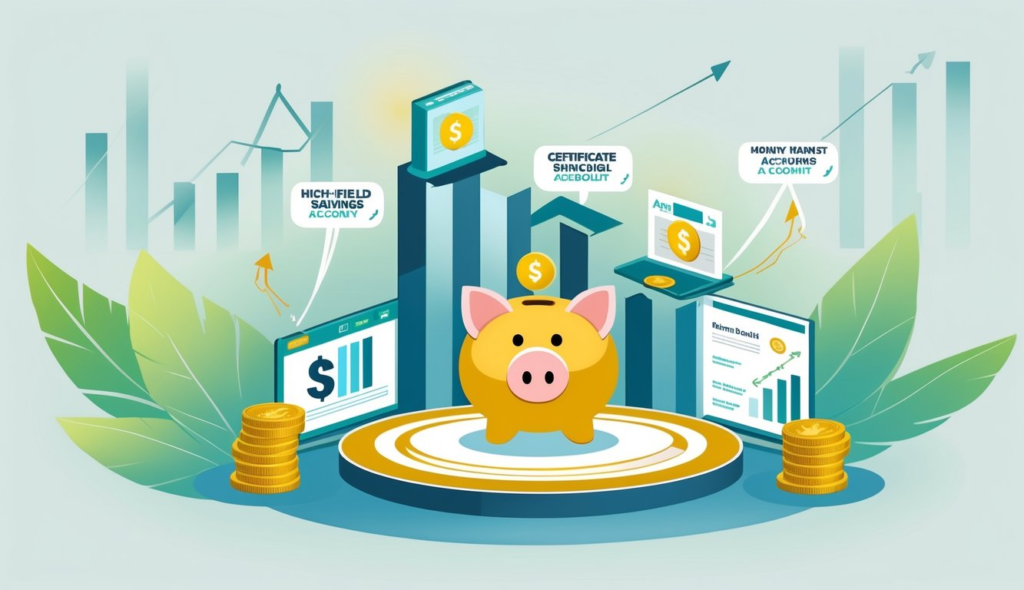
High-yield savings accounts aren’t the only way to store your cash. You’ve got a few other choices, each with their own mix of access, interest, and risk.
Certificates of Deposit
Certificates of Deposit (CDs) let you lock in a fixed interest rate for a set term—could be three months, could be five years. If you pull your money out early, you’ll pay a penalty.
CDs often pay more than savings accounts, especially if you lock in for longer. Some people build a CD ladder by opening several CDs with different maturity dates, so cash is always coming available while earning better rates.
If you don’t need instant access and want predictable returns, CDs are a good fit. They’re FDIC insured up to $250,000, so your principal stays safe.
Money Market Accounts
Money market accounts (MMAs) blend features of savings and checking accounts. They usually pay more than regular savings accounts, though maybe less than CDs or some HYSAs.
MMAs let you write a few checks or use a debit card, giving you moderate access. They often require a higher minimum balance to dodge fees and get the best rates.
If you want better yields and some flexibility, MMAs can work well. Like CDs and savings accounts, most are FDIC insured up to $250,000.
Checking Accounts
Checking accounts are for daily spending and bills. Most don’t pay much interest—if any—but you get unlimited access to your money.
Some high-yield checking accounts offer decent rates, but there’s usually a catch, like a minimum number of debit card purchases or direct deposits each month.
If you need fast, unrestricted access to your cash, checking accounts are the way to go. They’re insured up to $250,000 by the FDIC, but they’re not really built for growth.
Investment Options
Stocks, ETFs, and other market options can give you higher returns than savings products—but there’s more risk, including losing your principal.
ETFs give you diversified exposure and you can buy or sell them easily. Unlike savings accounts and CDs, investments aren’t FDIC insured, and their value can swing with the market.
If you’ve got time and can handle ups and downs, investing makes sense for long-term growth. But it’s not the best move for emergency funds or short-term savings.
How to Choose the Best High-Yield Savings Account
Picking a high-yield savings account means checking out both the bank type and the fine print. You want something that matches your habits and helps your money grow—without annoying fees or tricky requirements.
Evaluating Online vs. Traditional Banks
Online banks almost always offer higher interest rates than brick-and-mortar banks. They save on overhead and pass those savings to you with better APYs.
Most online banks are FDIC insured, so your money’s protected up to $250,000. But you’ll be dealing with apps, websites, or phone support—no in-person help. If you like face-to-face service, a traditional bank might feel better, but expect lower rates.
Online banks usually have better tech for mobile deposits and easy access. That’s a big plus if you’re comfortable banking digitally.
Assessing Account Requirements
Look for accounts with no minimum balance and no monthly fees to keep things simple. Some high-yield accounts ask you to keep a certain amount—like $100 or $500—to snag the top rate.
Always check withdrawal limits. Most high-yield accounts let you make up to six withdrawals per month. Make sure the account matches how often you plan to access your money.
Balancing a good APY with easy access and low costs makes your savings work harder for you. Don’t be afraid to shop around or ask questions—it’s your money, after all.
Maximizing Returns and Staying Safe
You want your savings to grow, but you also want your money to stay safe. To make that happen, it helps to know how interest rates and inflation affect what you earn.
FDIC insurance is another thing worth understanding—it can protect your funds if the worst happens. And there are a few simple tips that can help you dodge mistakes that eat into your earnings.
Understanding Interest Rates and Inflation
Interest rates decide how much your money earns in a high-yield savings account. Higher rates mean you make more.
Some accounts offer daily compounding, which lets your returns stack up even faster. If you can, pick one of those.
Inflation, though, chips away at your money’s buying power over time. If your interest rate doesn’t beat inflation, your savings lose real value.
Try to find an account with a rate that’s at least keeping pace with inflation. That’s the only way your money’s actually growing in the real world.
Interest rates can change, sometimes without much warning. Banks often adjust their rates after the Federal Reserve makes a move, but it can lag by months.
It’s smart to check what other banks are offering from time to time. You never know when you’ll spot a better deal.
FDIC Insurance and Account Security
FDIC insurance covers your deposits if a bank goes under. The standard insurance is $250,000 per depositor, per bank, for each account type.
That means even if your bank fails, your money’s protected up to that limit. Before you open any account, double-check that the bank has FDIC insurance.
It’s a small step, but it gives you real peace of mind. Also, look for accounts with strong security features, like two-factor authentication and encrypted online access.
These features help keep your savings safe from fraud or theft. After all, you want to focus on earning interest—not worrying about hackers.
Tips for Avoiding Common Pitfalls
Try not to make a bunch of withdrawals. Most high-yield savings accounts let you take out money only six times a month.
If you go over that, you might get hit with fees or denied transactions. It’s best to use these accounts for emergencies or short-term goals.
Watch out for sneaky fees that can chip away at your interest. Some banks charge wire transfer fees or require minimum balances to get the good rate.
Whenever you can, pick accounts with no fees and no minimums. That way, you keep more of what you earn.
And don’t stick with one bank out of habit. Interest rates can change, and online banks often offer better deals than traditional ones.
Moving your money for a higher rate can make a surprising difference over time.
Frequently Asked Questions
High-yield savings accounts usually have better interest rates than regular ones. You’ll get more reliable returns, but rates do shift with the economy.
Online banks tend to offer the best rates, though their minimums and fees can vary quite a bit.
What are the best high-yield savings accounts currently available?
As of October 2025, Axos Bank stands out with a 4.51% APY and no minimum balance. Vio Bank offers 4.31% APY if you can put in at least $100, and Newtek Bank has 4.35% APY with no minimum.
How do I calculate the interest for a high-yield savings account?
Interest is usually based on the annual percentage yield (APY). Just multiply your balance by the APY to get a rough idea of your yearly earnings.
For example, if you have $10,000 at 4% APY, you’ll make about $400 in a year.
What are the pros and cons of online high-yield savings accounts?
Online accounts often give you higher rates and skip the monthly fees. You can open and manage everything from your laptop or phone.
But if you want in-person service, you might be out of luck. Withdrawal limits are also something to watch for.
Are there any banks offering competitive rates similar to American Express and Chase?
Yep. Banks like Axos, Vio Bank, and Newtek have rates around or above 4%, which is right up there with American Express’s current 3.5%.
Rates can change, so it’s worth checking for the latest numbers before you move your money.
What alternatives to high-yield savings accounts offer a comparable return?
Certificates of Deposit (CDs) sometimes pay a bit more, but you have to lock up your money for a while.
Money market accounts are another option—they offer decent rates, easy access, and sometimes even a debit card.
How often do high-yield savings account rates change?
Rates can shift at any time, usually because of the Federal Reserve’s moves. In 2025, things mostly stayed steady, but there were a few small drops after the Fed cut rates in September.
Honestly, you should expect banks to tweak rates now and then, depending on where the economy’s headed.