
Managing small business finances can feel overwhelming at first. We found the QuickBooks guide surprisingly helpful—it takes bookkeeping, invoicing, payroll, and taxes and breaks them down in a way that’s easy to follow.
Some parts get a bit detailed for beginners, but the step-by-step approach made things easier to apply. The 2025 updates keep the info relevant with the latest QuickBooks features, which is always a plus.
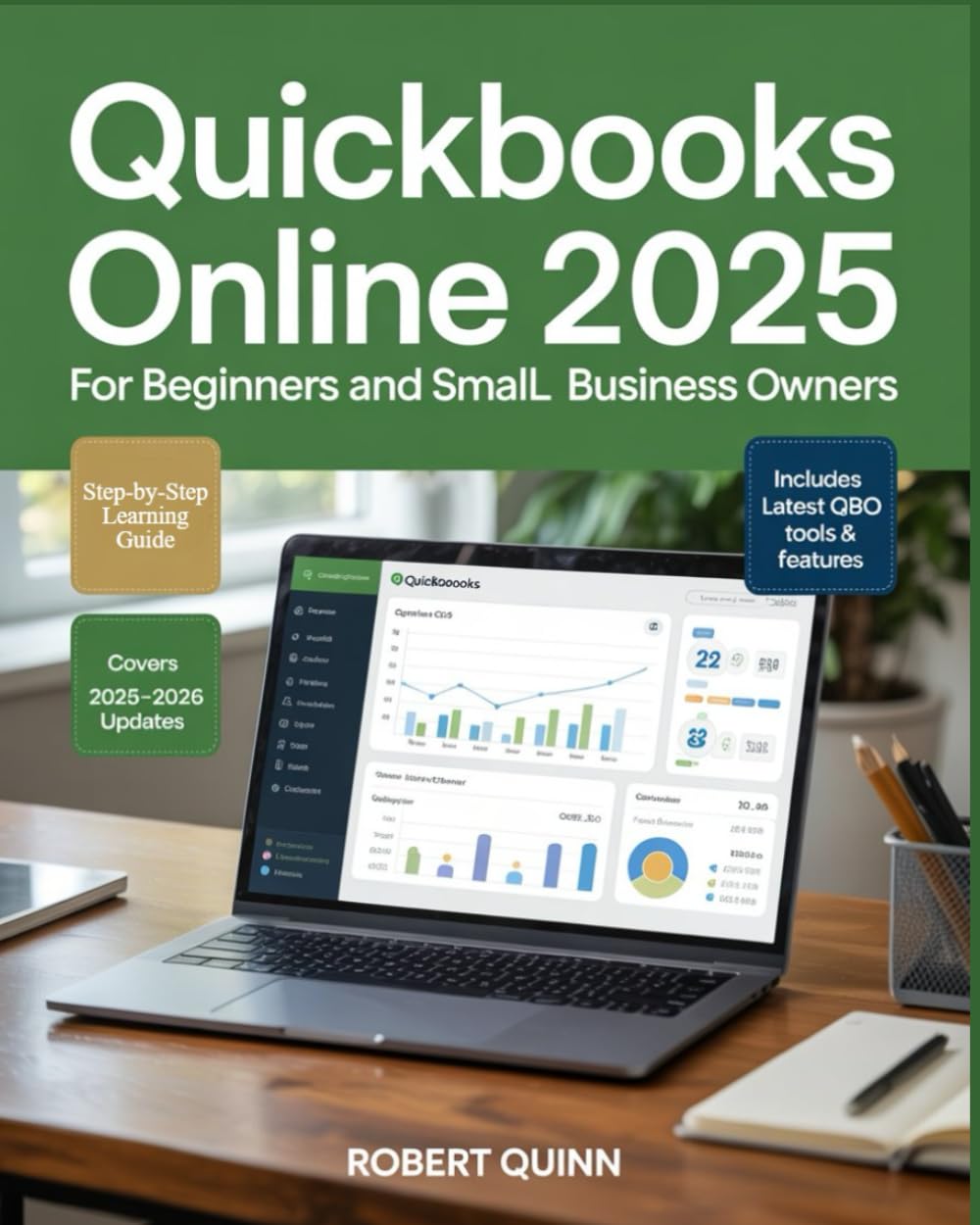
If you’re new to managing business finances or want a clear, updated guide, this QuickBooks book is worth checking out. It offers practical steps that can help simplify your accounting tasks.
Take the next step for your business by purchasing it here.
Overview of QuickBooks Online 2025 for Beginners and Small Business Owners
This guide feels like a solid resource if you’re new to bookkeeping or running a small business. It breaks down tasks like invoicing, payroll, and taxes into manageable steps.
The approach is straightforward, so we didn’t get overwhelmed. While it covers a lot, some parts could use clearer examples, especially for total novices.
The guide focuses on the latest QuickBooks updates, making it relevant for users who want to understand the 2025 version.
Key points:
- Step-by-step instructions
- Practical advice for small businesses
- Useful for understanding current QuickBooks features
Comprehensive Bookkeeping Guidance
The bookkeeping advice in this guide feels clear and practical. It walks through basic entries and organizing financial records step by step.
Instructions are easy to follow, even with little prior experience. Some sections move quickly over advanced topics, which might leave beginners needing extra help.
The focus on real business scenarios made it easier to apply what we learned.
Key points we appreciated:
- Clear explanations of common bookkeeping tasks
- Practical examples that mirror real work
- Balanced detail without too much technical jargon
Step-By-Step Invoicing Instructions
When we followed the guide, invoicing became pretty straightforward. It breaks down how to start an invoice, add client details, and include services or products step by step.
We liked that it shows how to customize invoices to fit your business style. The instructions also cover how to set payment terms and send invoices directly through QuickBooks Online.
Some steps felt a bit detailed for beginners, but the screenshots helped us follow along.
To summarize, the process includes:
- Creating a new invoice
- Adding customer and item info
- Setting payment options
- Reviewing and sending the invoice
Payroll Made Easy
Payroll can be tricky, but this guide breaks it down into simple steps. We found it helpful for setting up employee payments and managing taxes without getting overwhelmed.
The instructions are clear, even if you’re new to payroll tasks. Some parts take time to fully grasp, especially if payroll rules are new to you.
The guide doesn’t skip details but keeps things straightforward. It’s not a shortcut, but it helps us avoid common mistakes and feel more confident running payroll right.
Pros:
- Clear, step-by-step directions
- Covers important tax information
- Easy to follow for beginners
Cons:
- Takes time to learn all parts
- Some technical terms still appear
Tax Preparation Support
Dealing with taxes isn’t easy, but this guide made it more manageable. It walks through the basics of organizing your tax documents within QuickBooks Online, so you don’t miss important details.
The step-by-step approach helped us track expenses and income properly for tax time. The book focuses mostly on the essentials, so it may not cover complex tax scenarios in depth.
Still, it points out where to find helpful QuickBooks tools and features that simplify tax prep.
What worked well:
- Clear instructions on linking bookkeeping to taxes
- Simple guidance on tax categories
- Helps reduce errors by tracking everything carefully
What could improve:
- More on handling advanced tax issues would be useful
Exploring the Latest 2025 Features
Trying out the 2025 version, we noticed it focuses on making bookkeeping and payroll easier for small businesses. The guide walks us through new tools that simplify tracking expenses and handling taxes without confusion.
Some updates stand out, like clearer invoicing steps and better explanations for recent tax changes. The book sometimes feels a bit detailed for total beginners.
What works well:
- Step-by-step instructions that follow the updated QuickBooks interface
- Practical tips for avoiding common money mistakes
What could improve:
- Some areas could use simpler language to speed up learning
User-Friendly Layout and Accessibility
The layout is easy to follow, which helped us move through the steps without confusion. The book organizes information clearly, with simple headings and plenty of white space.
This makes it less tiring to read for longer periods. Navigation feels natural, and important topics are easy to locate.
The design sticks to a straightforward approach, so it might seem a bit plain if you’re used to more interactive guides. Accessibility is good—the text size and spacing make it comfortable to read.
The book is light and easy to handle, which adds to its user-friendliness when working through the chapters.
Strengths:
- Clear section breaks
- Comfortable text spacing
- Light and easy to carry
Considerations:
- Minimal visual excitement
- No interactive content
Pros and Cons
After spending time with this guide, we found some clear strengths and weaknesses worth noting. It helps to know what works well and what might hold you back before diving in.
Pros
- Easy to follow: The steps are clear and simple. We didn’t get lost even though we are new to bookkeeping.
- Covers key features: It explains invoicing, payroll, and taxes well enough for small business owners who just want to get it done.
- Updated content: The guide includes the latest changes for 2025 and 2026, so we felt confident that we were learning current information.
- Practical focus: Instead of overwhelming details, it focuses on what matters most for day-to-day use.
- Helpful for beginners: If you’re new to QuickBooks Online, this guide really breaks down complex parts in an understandable way.
Cons
- Not for advanced users: If you already know QuickBooks well, this guide might feel too basic.
- Some topics could use more depth: A few sections, like payroll, could be explained with more examples or detail.
- Limited visuals: The book relies mostly on text, so people who learn better with more screenshots or videos might find it tough.
- Paced for slow learners: Those who want to move fast might find it a bit slow and repetitive in parts.
Customer Reviews
From what we’ve seen, users appreciate how easy the guide makes learning QuickBooks Online, especially for beginners and small business owners. The step-by-step approach helps many get through bookkeeping, invoicing, and payroll without feeling overwhelmed.
Some mention the clear instructions saved them time when setting up their accounts. A few users wished for more examples or visuals to explain certain features better.
Pros:
- Simple, clear steps
- Helpful for beginners
- Covers important topics like taxes and payroll
Cons:
- Could use more detailed examples
- Some found parts less detailed than expected
Frequently Asked Questions
When using QuickBooks Online, a lot of us want to know how budgeting works and what we can expect from the platform. After working with it, we found some common questions that are important to cover clearly.
How do I create a budget within QuickBooks Online?
Creating a budget is pretty straightforward once you know where to look. We navigated to the budgeting tool through the company settings and entered estimated income and expenses by category.
The process is simple but does require you to plan your numbers carefully before inputting them.
Can QuickBooks Online generate budget versus actual reports?
Yes, QuickBooks Online offers reports that compare your budget to actual spending. We used this feature to track how close our spending was to our planned budget.
The reports are easy to read and help spot where adjustments are needed.
What subscription tier is required for budgeting features in QuickBooks Online?
Budgeting features only come with certain paid plans. In our experience, the basic tiers don’t support budgeting tools.
If budgeting is important to you, check the plan options to make sure your subscription includes this feature.
What are the steps to import a budget template into QuickBooks Online?
Importing a budget template means saving your budget data as a spreadsheet first. We prepared the file according to QuickBooks’ format, then used the import tool inside the budgeting section.
This saves time compared to manual entry, but you’ll need to pay attention to formatting details.
How does forecasting differ from budgeting in QuickBooks Online?
Forecasting lets you estimate future financial outcomes based on trends. Budgeting is more about setting specific financial goals.
We used budgeting to plan our spending. Forecasting helped us see where our finances might head under different conditions.
What is the initial period for budgets created in QuickBooks Online?
Budgets can start from any month you want. Most people just go with the current fiscal year, honestly.
This flexibility lets you match your budgeting periods to your business. You can use the calendar year, a fiscal year, or even something else if that works better.
Summary Table
| Question | What We Found |
|---|---|
| Creating a budget | Go into company settings. Enter income and expenses by hand. |
| Budget vs. actual reports | They’re available and honestly pretty useful for tracking. |
| Subscription tier needed | You’ll need a higher-tier plan for budgeting features. |
| Importing budget template | You’ll need a spreadsheet. Make sure you follow the format closely. |
| Forecasting vs. budgeting | Forecasting predicts what might happen. Budgeting is about setting goals. |
| Initial budget period | You can pick any start month, but most use the fiscal year. |