
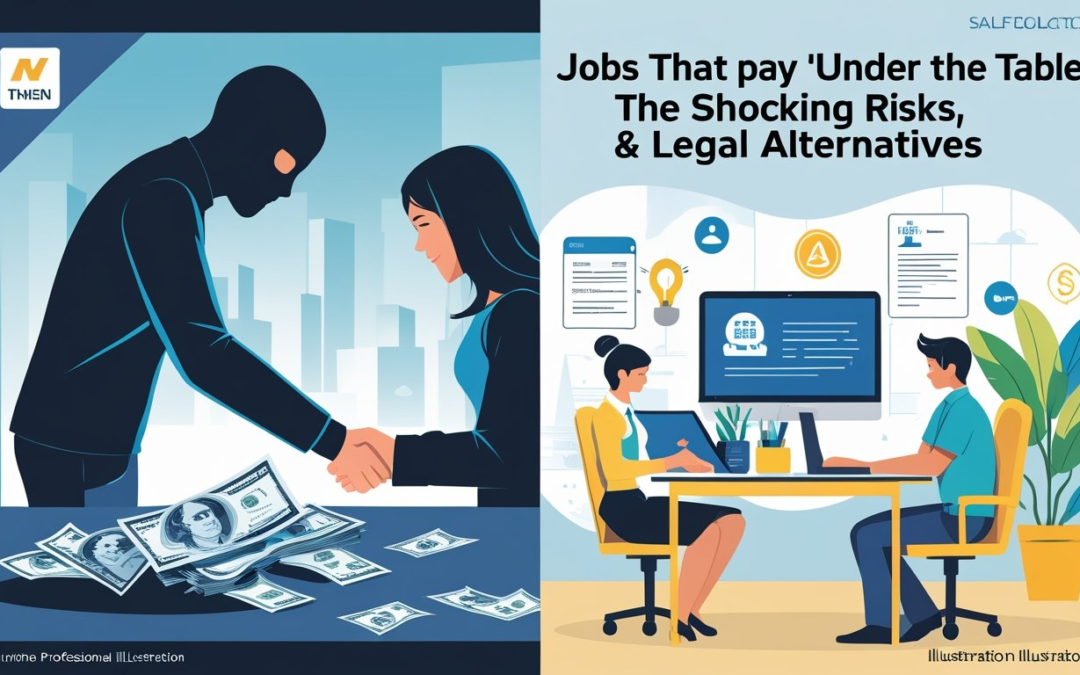
Getting paid “under the table” might sound like easy money at first. But it can seriously mess up your finances in the long run.
Plenty of workers take cash payments, not realizing they’re breaking tax laws or giving up benefits like Social Security credits and unemployment protection.
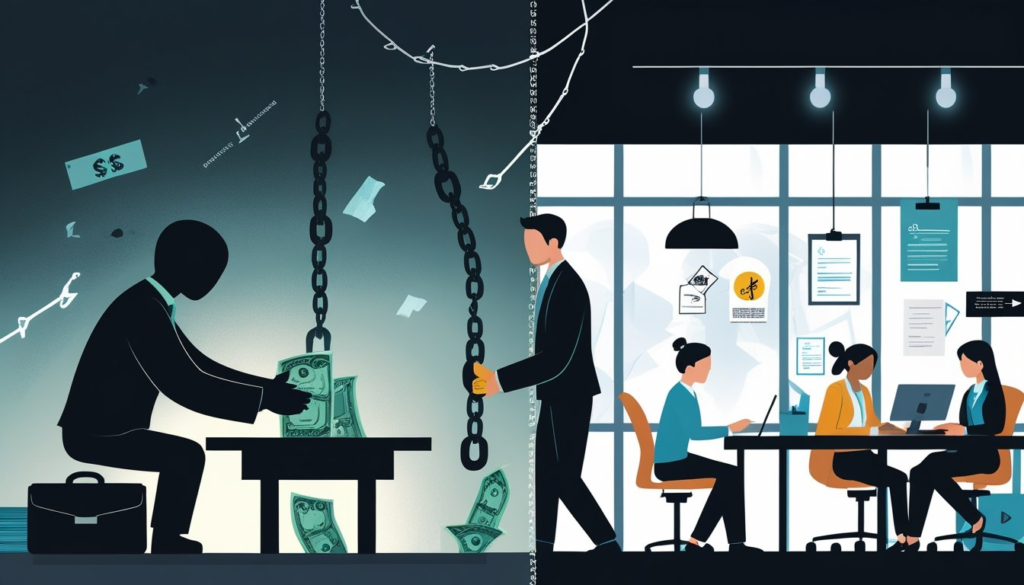
Both employees and employers risk big legal trouble—think tax evasion charges, fines, and back taxes with interest—when they get caught working under the table.
The IRS keeps a close eye on unreported income, and honestly, the fallout goes way beyond just paying a little extra later.
I’ll break down the hidden dangers of cash jobs, which industries use them most, and how you can find legit work that protects your rights and future. It’s worth knowing the risks now instead of scrambling later.
Key Takeaways
- Under the table jobs break tax laws and put both workers and employers at serious legal and financial risk
- Cash payments mean no access to benefits, job security, or Social Security credits that help you later
- Legal jobs offer the same earning potential, minus the scary consequences of unreported work
What Does ‘Under the Table’ Pay Really Mean?

Under the table pay means getting cash without reporting it to tax authorities. Employers and workers both avoid official records and required tax withholdings, which brings a ton of legal and financial risk.
Definition and Common Practices
Getting paid under the table basically means you get cash and no one tells the IRS. The boss hands you money directly, skips taxes, and doesn’t keep payroll records.
Here’s what usually happens:
Cash-only deals—no paper trail. Workers get paid at the end of the shift or week, right on the spot.
No tax withholdings at all. You get the full amount, not a cent taken out for taxes or Social Security.
No employment records—no pay stubs, no W-2s, nothing official. The IRS and state agencies have no clue you earned that money.
Verbal agreements instead of contracts. Everything’s just talked about, not written down.
This happens a lot in restaurants, construction, landscaping, cleaning, and childcare. Small businesses often do it to save money and avoid paperwork.
Key Differences from Legal Employment
Legal jobs follow strict rules for reporting and withholdings. Under the table jobs ignore all that.
Tax obligations are the big difference. Legal employers withhold federal and state taxes, plus Social Security and Medicare, then match those contributions.
Official documentation is another big one. Legal jobs give you pay stubs, W-2s every year, and file payroll reports.
Worker protections come with legal jobs only—like unemployment insurance, workers’ comp, and overtime pay.
| Legal Employment | Under the Table |
|---|---|
| Tax withholdings | No tax deductions |
| Pay stubs provided | Cash only, no records |
| W-2 forms issued | No tax documents |
| Workers’ comp coverage | No injury protection |
| Unemployment benefits | No benefits available |
Why Employers and Workers Choose Cash Jobs
Employers pick under the table payments mostly to cut labor costs and skip regulations.
Lower expenses are a huge motivator. Skipping payroll taxes saves thousands every year, and they don’t pay into unemployment or workers’ comp.
Less paperwork is a big plus for small business owners. No tax filings or payroll processing headaches.
Workers have their own reasons. Immediate payment means you get cash right away, no waiting for checks to clear.
Higher take-home pay is appealing too—no taxes taken out, so you pocket more per hour.
Immigration status sometimes pushes people toward cash jobs. Some folks don’t have work authorization or just want to avoid government attention.
Extra income is another reason. People with regular jobs sometimes want side gigs for cash without it showing up on official records.
Common ‘Under the Table’ Jobs and Industries
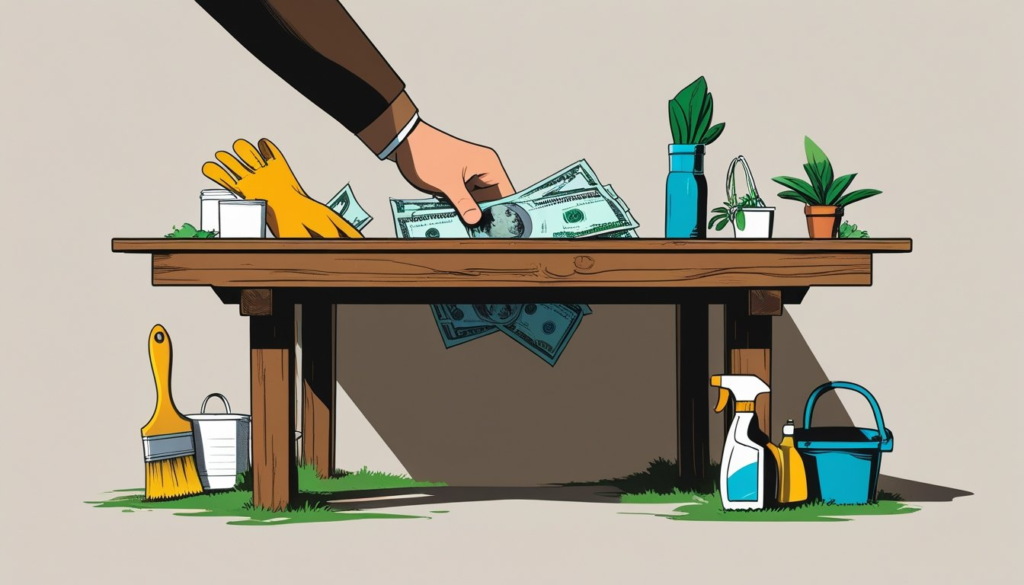
You’ll find cash-paying jobs all over, especially in services like lawn care, babysitting, and housework. Digital platforms have opened up new ways to work off the books, but old-school sectors like construction and food service still dominate unreported income.
Popular Roles: From Lawn Care to Moving
Lawn care and gardening are classic cash gigs. Rates are usually $15-20 per hour for mowing, and up to $25-40 for landscaping.
Seasonal work changes throughout the year:
- Spring/Summer: Mowing, gardening, pool cleaning
- Fall: Leaf removal, gutter cleaning
- Winter: Snow removal, holiday decorating
Household jobs like cleaning pay well—sometimes $40-100 per hour, depending on where you live. Pet sitting can bring in $30-60 a day.
Moving and labor jobs pay more but are tough physically. Day laborers can make $100-200 helping with moves or construction.
Personal services like tutoring ($20-50/hour), babysitting ($12-20/hour), and elderly care are often paid in cash, right after the job.
A lot of clients prefer cash to skip fees and paperwork. But both sides are still supposed to report that income.
Gig Platforms and Informal Work
Digital platforms blur the lines between formal and informal work. Companies like Angi send out tax forms, but plenty of deals happen off the platform.
Places where cash deals are common:
- TaskRabbit for odd jobs
- Care.com for childcare and senior help
- Rover for pet care
- Local Facebook groups for all sorts of services
Workers often start on these platforms, then switch to cash deals with repeat clients to avoid fees. But that means losing legal protections.
Word-of-mouth networks make it easy to find cash gigs. Apps like Nextdoor connect locals who want to pay cash for services.
Digital payments like Venmo make things murky. These leave a digital footprint, but people still sometimes skip reporting the income.
Lots of gig workers mix platform-reported income with side cash jobs from regulars.
Sectors Most at Risk for Off-the-Books Pay
Construction and home improvement are notorious for cash payments. Small contractors pay daily in cash to dodge payroll taxes and workers’ comp costs.
High-risk construction roles include:
- Day labor at job sites
- Residential painters and handymen
- Roofers and drywall installers
- Landscaping crews
Food service is another big one. Restaurant workers sometimes get unreported tip income or cash wages from catering.
Domestic work—think housekeepers, nannies, home health aides—often gets paid in cash, straight from families.
Agriculture has a long tradition of cash pay, especially for seasonal or harvest workers.
These jobs attract cash payments because they’re often short-term, clients want lower costs, or workers don’t have the paperwork for regular employment. Still, both sides risk serious legal and financial trouble if they don’t report the income.
The Legal and Financial Risks of Taking Cash Jobs
Cash jobs bring real legal headaches and financial risks that can stick with you for years. If you take under-the-table pay, you face tax penalties, lose out on government benefits, and have zero workplace protection.
Tax Evasion Consequences
When I take cash and don’t report it, that’s tax evasion. It’s a crime, plain and simple, and can mean both civil and criminal penalties.
The IRS says I have to report all income, no matter how I get paid. Cash isn’t invisible to them, no matter what people tell you.
If I get caught, I could owe big money:
- Back taxes plus interest
- Failure-to-file penalties up to 25% of what’s owed
- Failure-to-pay penalties up to 0.5% each month
Criminal charges can mean felonies. Tax evasion can land you five years in prison and fines up to $100,000 for individuals.
The IRS uses all sorts of tools to find unreported income. They cross-check info from everywhere, so it’s not as easy to hide as people think.
Loss of Social Security and Medicare Benefits
Cash jobs can wreck my future Social Security and Medicare benefits. Those programs calculate what I get based on my reported earnings over my life.
If I don’t report cash, those dollars don’t help my benefits at all. That means smaller Social Security checks when I retire.
This can lead to:
- Lower retirement benefits
- Less disability coverage if I can’t work
- Reduced Medicare eligibility
Social Security needs 40 quarters of covered work. Cash jobs that aren’t reported don’t count toward that.
Medicare eligibility also depends on work history that’s officially reported. Skip that, and I might miss out on important coverage.
Social Security is already not much to live on. Cutting it down more by not reporting income seems like a bad idea.
Unemployment Insurance and Workers’ Compensation Issues
Cash jobs leave me with zero workplace protections. If I lose my cash job, I can’t get unemployment benefits.
Unemployment insurance depends on documented work and payroll taxes. Cash gigs don’t provide either.
Workers’ comp kicks in if you get hurt at work, but employers who pay cash usually don’t have this insurance.
So if I get hurt or laid off, I’m stuck with:
- No unemployment checks
- No coverage for injuries on the job
- Paying my own medical bills if I get hurt working
If I get injured during a cash job, I’m on the hook for everything. The employer doesn’t have to help at all.
Penalties and Back Taxes
When the IRS discovers unreported cash income, the financial fallout happens fast. Suddenly, I owe all the back taxes, plus extra penalties and interest.
They start calculating penalties from the original tax due date. Interest piles up daily, so what I owe can balloon pretty quickly.
Common penalty calculations:
- FICA taxes: 15.3% of unreported income
- Federal income tax: Based on my tax bracket
- State taxes: Varies by location
- Interest: Current IRS rate compounded daily
Back tax bills can easily end up bigger than the income I didn’t report. For example, a $10,000 cash payment might turn into $15,000 or more once taxes and penalties stack up.
The IRS doesn’t mess around when it comes to collections. They’ll garnish wages, freeze bank accounts, or slap liens on property if I don’t pay up.
Sure, payment plans exist, but interest never stops growing. That debt just hangs around until I finally pay it off, no matter how long it takes.
Impact on Your Financial Future
Working under the table causes money headaches that can stick around for years. These jobs quietly wreck my chances at loans, retirement savings, and even career growth in ways I didn’t expect.
Building Credit and Accessing Financial Services
Banks and lenders always want proof of income before handing out loans or credit cards. If I work under the table, I can’t show pay stubs or tax returns to back up what I earn.
This makes it nearly impossible to get approved for:
- Mortgages for buying a home
- Car loans for vehicle purchases
- Credit cards for building credit history
- Personal loans for emergencies
Without official tax records, my credit score stays low or just doesn’t exist. Lenders get nervous because they can’t check if I can pay them back.
Even basic banking gets tricky. Some banks want to see employment verification before opening certain accounts or giving better rates.
Getting paid in cash also means I miss out on building a paper trail of responsible financial habits. That can haunt my financial reputation for a long time.
Retirement Planning Dangers
Working off the books messes with my retirement in a bunch of ways. If my employer doesn’t report my wages, neither of us pays into Social Security.
Social Security looks at my highest 35 years of earnings. If I have years with no reported income, those count as zeros and can seriously shrink my future checks.
I also lose out on employer retirement plans like 401(k)s. Those company matching contributions make a huge difference in long-term savings.
Traditional and Roth IRAs only let me contribute based on reported income. Without official wage records, I can’t even prove I’m allowed to put money in.
Delaying retirement savings costs me thousands thanks to lost compound interest. Money I could stash away in my 20s or 30s would grow way more than if I start late.
Effect on Career Growth and Job Security
Working under the table leaves holes in my work history, which makes future job searches much harder. Real employers want to see steady records and check my past jobs.
I can’t use unofficial supervisors as references. That makes it tough to show off my skills or work ethic to new employers.
Professional networking takes a hit too. I miss out on meeting industry contacts who might help me find better gigs down the road.
Moving up the career ladder is almost impossible without documented experience. Promotions and higher-paying jobs usually require proof of what I’ve done.
Job security? Forget it. If I’m paid under the table, I have zero legal protections. I could get fired without warning and have no way to fight back.
Safe and Legal Alternatives to ‘Under the Table’ Jobs
You can work legally and still get paid in cash if you follow the right tax rules. Setting up legit freelance gigs and using trusted platforms keeps you out of trouble and still gives you flexibility.
Freelancing the Right Way
If you set up freelance work the right way, you stay legal and keep your freedom. Treat everything you earn as self-employment income on your taxes.
Send proper invoices for every job. List your name, the client’s info, what you did, and how much you got paid. Save copies of everything.
Track all your work expenses—supplies, gas, equipment, whatever. You can deduct these from your taxable income.
If you plan to freelance regularly, register your work as a business. It boosts your credibility with clients and makes tax time less of a headache.
Open a separate bank account just for freelance money. It’s way easier to track income and expenses, and it shows the IRS you’re serious.
Put aside 25-30% of what you earn for taxes. Freelancers pay both income tax and self-employment tax. Keep that money in a separate spot so you’re not scrambling later.
Using Reputable Platforms for Gig Work
Platforms like Angi, Upwork, and TaskRabbit pay you legally but still feel flexible. They’ll send you tax forms at the end of the year—no surprises.
Most of these sites direct deposit your money within a few days. It’s almost as fast as cash, but without the legal headaches.
They track all your earnings automatically and send a 1099 if you make over $600. Tax filing gets way easier with their records.
Start out on these platforms to build your reputation. Good reviews help you charge more, and after a while, you might land direct clients.
Check each site’s payment rules. Some charge fees for instant payouts, but regular transfers usually take 3-5 days and don’t cost anything.
How to Report Cash Income Correctly
You have to report all cash income on your tax return, even if you never get a W-2 or 1099. The IRS expects you to report every dollar earned.
If you’re self-employed or freelancing, use Schedule C. This form lets you deduct business expenses and connects to your main tax return.
Keep detailed records of every cash payment—date, amount, what you did. Sometimes I even snap a photo of the cash for my records.
If you think you’ll owe more than $1,000, pay estimated taxes each quarter. Use Form 1040ES to figure it out and send payments. That way, you’re not slammed with a giant bill in April.
Don’t forget self-employment tax on cash income. This covers Social Security and Medicare, and the rate is 15.3% on top of regular income tax.
Key Cash Income Reporting Steps:
- Report all cash on Form 1040
- Use Schedule C for business income
- Pay quarterly estimated taxes
- Set aside money for payroll taxes
- Keep detailed payment records
Frequently Asked Questions
Lots of people have specific questions about the legal risks, reporting requirements, and other options besides cash payments. Knowing these details helps you make smarter choices about work.
What are the legal risks of accepting under-the-table employment?
I’ve seen workers hit with steep tax penalties for taking unreported cash. The IRS can fine you up to 75% of the unpaid taxes on top of what you already owe.
In really bad cases, criminal charges can happen too. Tax evasion carries up to five years in prison under federal law.
When you’re paid under the table, you lose out on protections. No unemployment, no workers’ comp, no guaranteed overtime pay.
Your future Social Security checks shrink, because the government only counts reported earnings when calculating benefits.
How can individuals report income from cash-only jobs to comply with tax laws?
I always recommend reporting every bit of cash income on Form 1040. The IRS wants you to report every dollar, no matter how you got it.
Keep track of all cash payments—write down dates, amounts, and who paid you for each job.
If you expect to owe taxes, estimate quarterly payments using Form 1040-ES. That helps avoid a nasty surprise at tax time.
If possible, ask employers for documentation like a 1099 for contract work. It’s another way to prove your earnings.
What are some legitimate alternatives to under-the-table jobs?
Look into gig platforms that provide legal paperwork. Apps like Uber, DoorDash, and TaskRabbit all issue proper tax forms.
Freelance websites offer contract work with built-in payment tracking. Upwork and Fiverr automatically generate tax docs for workers.
Part-time jobs through staffing agencies give you legal protections. They handle payroll taxes and worker status the right way.
Starting a small business lets you take cash legally, but you still have to report income and pay self-employment taxes.
Can receiving payment ‘under the table’ lead to legal consequences for workers with disabilities?
Unreported income can mess with disability benefits. Social Security Disability Insurance has strict income limits, and unreported cash can push you over.
If you get caught, you could lose your disability benefits and have to pay back what you received. The Social Security Administration takes this stuff seriously.
Medicaid eligibility also depends on honest income reporting. Unreported cash could get you kicked off your healthcare coverage.
Penalties can be even harsher for disability recipients. Agencies keep a close watch for fraud in these cases.
What options are available for legally reporting income from domestic jobs like cleaning that often pay in cash?
Treat domestic work as self-employment for taxes. Report your income on Schedule C and pay self-employment tax.
Write down every client and payment. You can use a notebook or a simple phone app to track what you earn.
Try asking clients to pay through Venmo or PayPal. That way you have automatic records for tax time.
It’s fine to accept cash, but you still have to report every dollar. The IRS doesn’t care how you got paid—the tax rules stay the same.
How is the gig economy providing similar opportunities to under-the-table work with legal protections?
I’ve noticed gig platforms give people the flexibility they want from cash jobs. You get to pick your hours and decide how much you work, without the old-school job restrictions.
These apps sort out tax paperwork for you. Companies send out Form 1099s that show what you made for the year.
Payment goes right through the app, so you’ve got a record of everything. You get your money fast, and it’s all above board.
Legit platforms offer some protections you just don’t get with cash gigs. A few gig companies even give options for insurance or benefits, which feels like a step up.