
Saving for a car on a low income can seem daunting. Still, with a good plan, you can make it happen.
The trick is to set clear goals, budget smartly, and use practical strategies to stretch your dollars. Cut unnecessary expenses, set up a separate savings account, and watch your fund grow—slowly but surely.

Try to reduce your current transportation costs. Pick up side gigs or sell things you don’t need anymore to boost your income.
Automate your savings and check your progress now and then. If saving the whole amount upfront isn’t realistic, look into affordable financing options.
Key Takeaways
- Set clear savings goals and make a budget you can actually stick to.
- Cut your expenses and look for ways to earn extra cash.
- Track your progress and think about financing if you need to.
Setting Clear Savings Goals

You can’t save for a car if you don’t know how much you’ll need or what kind of car you want. Figure out the total cost, decide between new or used, and pick a down payment target that feels doable.
Clear goals make it easier to plan and stick with it.
Estimating the Total Cost of Owning a Car
Don’t just think about the sticker price. You have to budget for taxes, insurance, maintenance, fuel, and registration fees.
For example, if the car is $15,000, add 6-10% for sales tax. Insurance might run about $1,200 a year, and maintenance plus fuel could be $1,500 or more.
Registration fees? Usually $50 to $150 a year, depending on where you live.
Here’s a quick table to help you visualize it:
| Expense | Estimated Annual Cost |
|---|---|
| Purchase Price | $15,000 |
| Sales Tax | $900 (6%) |
| Insurance | $1,200 |
| Maintenance | $500 |
| Fuel | $1,000 |
| Registration Fees | $100 |
Add it all up so you’re not blindsided later.
Choosing Between New and Used Vehicles
Should you get a new car or a used one? New cars cost more upfront, but you’ll probably have fewer repairs at first and usually get a warranty.
Used cars save you money right away, but you might spend more on maintenance. If you go used, check the car’s history and condition—don’t just trust the shiny paint.
Certified pre-owned cars can be a nice middle ground. They’re not brand new, but they’re checked out and often come with some warranty.
How long do you plan to keep the car? If it’s for years, maybe new is worth the price. If it’s just for a couple years, used might make more sense.
Deciding on a Down Payment Target
The bigger your down payment, the smaller your loan and monthly payment. Try for 10-20% down if you can.
On a $15,000 car, 10% down is $1,500. That’s a chunk, but it lowers your monthly bills and could get you better loan terms.
If that’s too much right now, start with what you can manage and bump it up as you go. Setting up automatic transfers to a car savings account helps you keep at it.
A solid down payment goal keeps your budget in check and your debt lower.
Budgeting for Car Savings
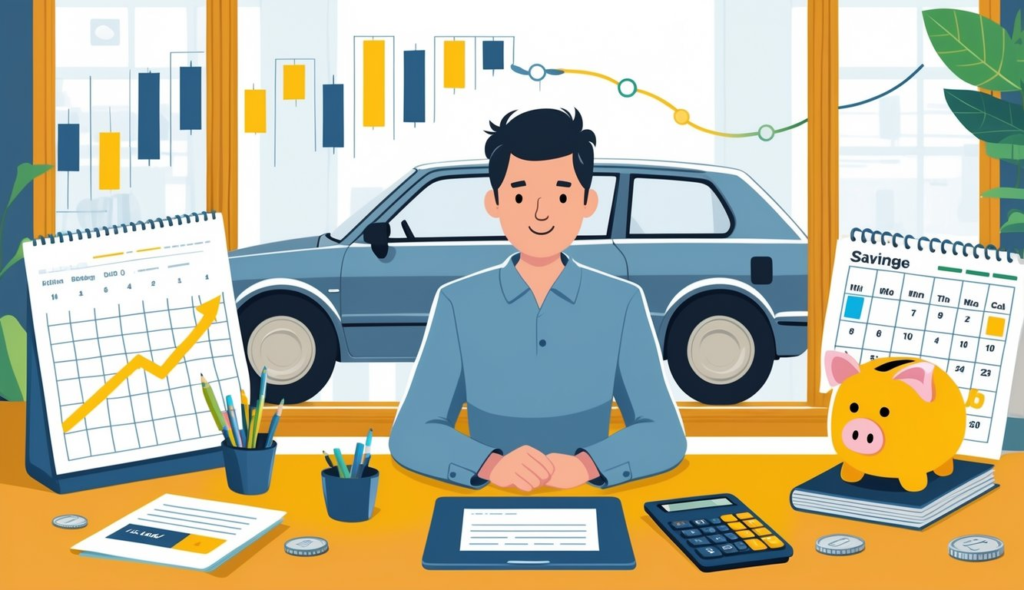
You need to know where your money’s coming from and where it’s going. Cutting back on non-essentials and deciding how much to save each payday will help your car fund grow.
Tracking Income and Expenses
Write down every source of income—your job, side gigs, anything regular.
List all your expenses. Split them into essential (like rent and groceries) and non-essential (like streaming services or takeout).
Use a notebook, an app, or a spreadsheet—whatever works for you. Doing this every month helps you spot leaks in your budget and find extra money to save.
Reducing Non-Essential Spending
Take a hard look at the stuff you don’t really need. Eating out, unused subscriptions, and impulse buys add up fast.
Try
Understanding Auto Loan Basics
An auto loan lets you borrow money to buy a car. You pay it back over time with interest.
Your monthly payment depends on the loan amount, interest rate, and loan term. Look for loans with low interest rates and payments you can actually handle.
Comparing offers from credit unions, banks, and lenders is key. Watch out for hidden fees or sky-high rates—they can really trap you in debt.
You usually make a down payment, which lowers both your loan amount and monthly costs. The bigger your down payment, the less you owe and the less interest you’ll pay over time.
Read every loan term carefully so you know exactly what you’re agreeing to. Don’t just skim—seriously, it’s worth the time.
Building or Improving Credit Score
Your credit score shapes the interest rates lenders offer you on an auto loan. A higher score often lands you better terms.
If your credit’s not great, try to improve it before you apply. Start by paying bills on time and lowering any existing debt.
Don’t open a bunch of new credit accounts in a short time—this can ding your score. Check your credit report regularly for mistakes, and dispute anything that looks off.
If you need a quick boost, try a secured credit card or a small personal loan to build positive payment history. Some lenders work with people whose scores are as low as 500, though the rates will likely be higher.
Evaluating Lease vs. Buy Decisions
Leasing usually means lower monthly costs, but you won’t own the car at the end. This route often requires a small down payment and shorter terms, which can help if your budget’s tight.
Buying means you’ll own the car once the loan is paid off. It takes a bigger upfront investment, but over the years, you’ll probably pay less since there aren’t lease fees.
Buying a used car can seriously cut your costs. Think about how long you want the car and what you can afford each month.
If you drive a lot, leases might hit you with extra fees. Buying gives you more freedom to customize or sell the car whenever you want.
Tracking Progress and Staying Motivated
Keeping track of your savings is huge if you want to reach your car-buying goal. You’ll want to check your progress, celebrate milestones, and tweak your plan if your financial situation changes.
Monitoring Savings Growth
Track your savings with a dedicated account or a savings app. Check your balance often—it’s motivating to see your progress.
A simple chart or graph can help you visualize how close you are to your goal. Automate transfers so your savings happen without thinking about it.
Set up transfers for every payday or another regular date. That way, you don’t forget or skip it when things get busy.
Keep records of deposits and any expenses tied to this goal. This gives you a clear view of where your money’s going and how you’re doing.
Celebrating Milestones
Recognizing small wins really helps keep your motivation strong. Set checkpoints at 25%, 50%, or 75% of your goal.
When you hit one, treat yourself—maybe with a snack you love or a little reward. It doesn’t need to cost much.
The point is to mark your progress and give yourself a boost. Visual reminders like progress charts on your fridge or wall can help too.
They remind you how far you’ve come and why you’re putting in the work.
Adjusting Your Plan as Needed
Life changes, and your income or expenses might too. If your savings slow down or you get a windfall, update your plan.
Adjust how much you save each month so it fits your real budget. If you hit a setback, lower your savings for a while but don’t stop entirely.
When things improve, bump your contribution back up. Look over your budget regularly to catch changes early.
Staying flexible helps you handle surprises without losing sight of your goal. Sometimes you have to adjust and that’s just how it goes.
Frequently Asked Questions
Saving for a car on a low income takes planning, some sacrifices, and sometimes outside help. You need realistic goals and the right vehicle for your budget.
What strategies can help save for a car on a limited budget?
Set a clear savings goal and stick to a strict budget. Open a separate savings account just for your car fund.
Cut daily expenses and try picking up side jobs to boost your income. Automate your savings transfers so you don’t have to think about it.
Are there financial assistance programs available for low-income individuals needing to buy a car?
Some nonprofits and community groups offer grants, low-interest loans, or discounted cars. These programs usually have requirements, so check what’s available locally and apply early.
Sometimes employers or organizations help with transportation too. It’s worth asking around and doing some research.
How can one reduce the overall cost of purchasing a vehicle with a low income?
Start by checking out used cars. They usually come with lower prices, and honestly, you might find something surprisingly reliable if you look hard enough.
Don’t shy away from older models. Sure, they might not have that new car smell, but the savings can be worth it.