
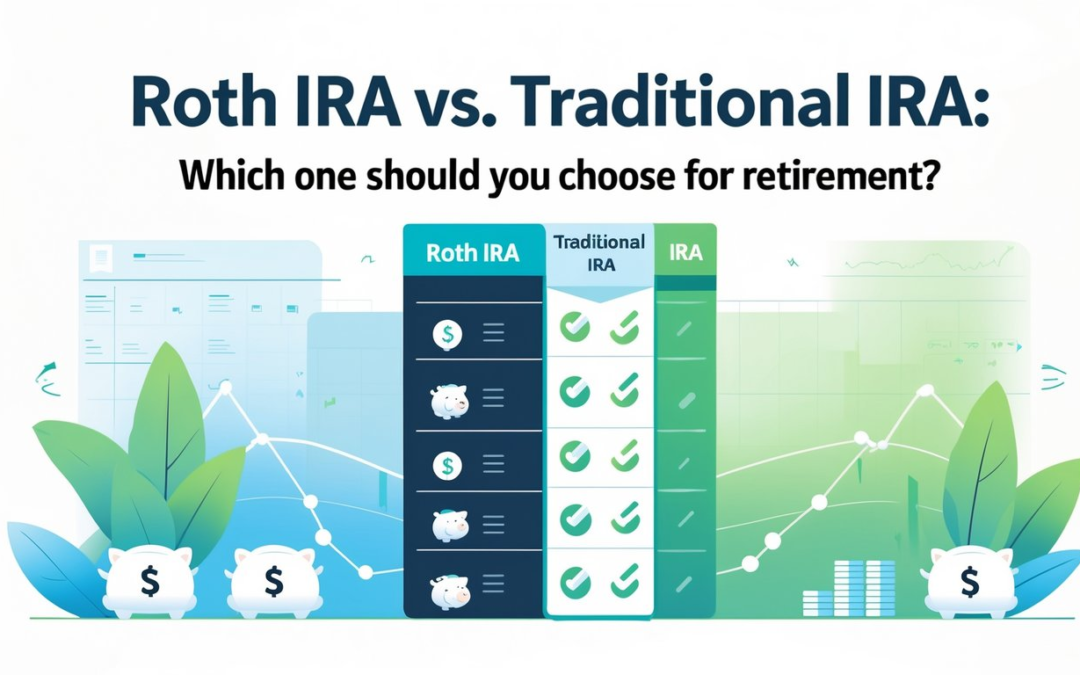
Choosing between a Roth IRA and a traditional IRA really comes down to when you want to deal with taxes. If you’d rather get a tax break now and think your income will be lower in retirement, the traditional IRA might make more sense.
But if you’d rather pay taxes upfront and then enjoy tax-free withdrawals down the road, a Roth IRA could be the better fit. Your best choice depends on your current tax rate, what you expect it to be later, and how you plan to use your retirement savings.

Both IRAs give you tax advantages and help you save for the future, but they work differently. Understanding these differences can help you figure out which account fits your goals and situation.
You can even contribute to both, as long as you stay within the annual limits. Knowing the rules about withdrawals, income limits, and tax impacts will guide your choice.
Learning the basics now can help you avoid mistakes and make your money work harder in retirement.
Key Takeaways
- Timing of tax benefits is key to choosing the right IRA for you.
- Income limits and withdrawal rules vary between Roth and traditional IRAs.
- Both IRAs offer tax advantages that can help you grow your retirement savings.
Understanding Roth IRA and Traditional IRA

You’ve got options when it comes to individual retirement accounts, and each has its own rules about taxes, contributions, and withdrawals. Knowing how these accounts work can help you decide which one lines up with your financial situation and retirement plans.
What Is an Individual Retirement Account (IRA)?
An IRA is a savings account designed for retirement. It offers tax benefits to encourage you to save money over time.
You can contribute a certain amount each year, and your money can grow through investments like stocks, bonds, or mutual funds. There are two main types of IRAs: Roth and traditional.
Both let you save outside of work retirement plans, but they differ in when you get tax breaks and how withdrawals are taxed. You must have earned income to contribute, and there’s a yearly limit on how much you can add across all your IRAs.
This makes IRAs handy if you want more control over your retirement savings.
Roth IRA Overview
A Roth IRA lets you put in money you’ve already paid taxes on. Since you pay taxes before contributing, your withdrawals after age 59½ are usually tax-free—including all the earnings—if you meet the five-year rule.
You can take out the money you put in at any time without penalties or taxes. That flexibility makes Roth IRAs appealing if you want access to your contributions before retirement.
But not everyone can contribute to a Roth IRA. The IRS sets income limits, so if you earn too much, your ability to contribute might be reduced or even eliminated for the year.
Roth IRAs don’t require you to take money out at any age, so your investments can keep growing tax-free as long as you want.
Traditional IRA Overview
A traditional IRA lets you contribute pre-tax dollars if you qualify, which might lower your taxable income for the year. You could get an upfront tax deduction depending on your income and whether you have a workplace retirement plan.
The money grows tax-deferred until you withdraw it, usually after age 59½. When you take money out, it’s taxed as regular income.
Withdrawals before 59½ might face taxes and penalties unless you qualify for exceptions, like buying your first home or paying for education. Traditional IRAs require you to start taking withdrawals—called required minimum distributions (RMDs)—starting at age 73.
You have to begin using the money or face penalties, even if you don’t need it right then. You can contribute to a traditional IRA at any income level, but whether your contribution is tax-deductible depends on your income and if you or your spouse have a work retirement plan.
Key Differences Between Roth IRA and Traditional IRA
It’s important to know how contribution rules, taxes, withdrawals, and required minimum distributions differ between Roth and traditional IRAs. These differences affect when you pay taxes, how much you can put in, and when you have to start taking money out.
Contribution Rules and Limits
Both types share the same annual contribution limit. In 2025, that’s $6,500 if you’re under 50, or $7,500 if you’re 50 or older.
This limit covers your total contributions across both accounts, not each one separately. For a traditional IRA, you can contribute as long as you have earned income—no matter how much you make.
But whether you get a tax deduction depends on your income and if you or your spouse have a work retirement plan. For a Roth IRA, your income must fall below certain limits to contribute at all.
If you earn too much, your contribution limit might be reduced or gone entirely. Roth IRA contributions aren’t tax-deductible.
Tax Treatment of Contributions
The big tax difference is when you get the benefit. With a traditional IRA, your contributions might be tax-deductible upfront, lowering your taxable income for that year.
But you’ll pay income tax on withdrawals in retirement. A Roth IRA works the other way—you contribute money that’s already been taxed, so there’s no deduction now.
Qualified withdrawals in retirement are tax-free, including your contributions and any earnings. That’s a pretty sweet deal if you expect to be in a higher tax bracket later.
Withdrawal Rules and Penalties
With a traditional IRA, you generally can’t withdraw money penalty-free before age 59½ unless it’s for special reasons like a first home, education, or medical expenses. Early withdrawals usually face taxes and a 10% penalty unless you qualify for an exception.
With a Roth IRA, you can take out your contributions anytime without taxes or penalties since you already paid taxes on that money. But earnings can only be withdrawn tax- and penalty-free after age 59½ and if the account’s been open at least five years.
Early withdrawals of earnings might owe taxes and penalties. It’s a detail that trips up a lot of people.
Required Minimum Distributions (RMDs)
Traditional IRAs require you to start taking required minimum distributions (RMDs) at age 73. The IRS uses life expectancy tables to figure out how much you must withdraw, and those withdrawals count as taxable income.
Roth IRAs don’t require RMDs during your lifetime. That means your investments can keep growing tax-free for as long as you want, which is especially helpful for estate planning or if you want more flexibility in retirement.
Tax Advantages and Implications
Choosing between a Roth and traditional IRA means thinking about how taxes will affect your savings now and later. The way each account handles taxes impacts your withdrawals, growth, and even your income reporting.
Current and Future Tax Brackets
With a traditional IRA, your contributions reduce your taxable income now. You get a tax break today because you’re using pre-tax dollars.
When you withdraw money in retirement, you’ll pay income taxes on both the original contributions and all the earnings. A Roth IRA flips that script—you contribute with after-tax dollars, so there’s no break now.
But your withdrawals in retirement are tax-free, including the earnings, as long as you follow the rules. If you expect your tax rate to drop in retirement, a traditional IRA might save you more money.
If you think you’ll be in a higher tax bracket later, a Roth IRA might be better since you pay today’s lower rate. It’s tough to know for sure, but it’s worth thinking about.
Tax-Free Growth Benefits
Roth IRAs grow tax-free, so you won’t owe taxes on what your account earns over time. That can be a big advantage if your investments do well.
Traditional IRAs also grow tax-deferred, meaning you don’t pay taxes until you take money out. You postpone taxes, but you’ll still owe them eventually.
Tax-free growth can help you avoid taxes on withdrawals in retirement. This is especially helpful for younger investors or anyone who expects their earnings to grow.
Impact on Taxable Income
Contributing to a traditional IRA lowers your taxable income for the year. This might help you qualify for certain tax credits or deductions.
For example, it can lower your Adjusted Gross Income (AGI), which affects other tax breaks. Roth IRA contributions don’t lower your taxable income since you use after-tax dollars, so your AGI stays the same.
You might not get immediate tax benefits, but you’ll have tax-free withdrawals later. Your decision can affect more than just retirement taxes—it also changes your taxable income now and your eligibility for other tax advantages.
Timing of Tax Savings
The key difference in tax savings is when you get the break. Traditional IRAs offer immediate tax savings because contributions reduce your income now.
You defer taxes until you take money out. Roth IRAs give you no deduction now, but you avoid taxes later, even on earnings.
This can be valuable if you think taxes will be higher in retirement or if you want more flexibility in taking money out. Both accounts provide tax benefits, but the timing depends on your current financial picture and what you expect for the future.
Eligibility and Contribution Considerations
When you’re deciding between a Roth IRA and a traditional IRA, you’ll want to know the rules about who can contribute, how much you can put in, and how other retirement plans like a 401(k) might affect your options.
These details can shape your tax benefits and your bigger retirement strategy. It’s worth digging into the fine print before you make your move.
Income Limits and Phase-Outs
Your income affects whether you can contribute to a Roth IRA. If you earn above certain IRS limits, your allowed contribution may shrink or disappear.
These limits change every year and are based on your modified adjusted gross income (MAGI).
Traditional IRAs don’t have income limits for contributions. But if you or your spouse have a retirement plan at work, your income decides if your traditional IRA contributions are tax-deductible.
| IRA Type | Income Impact | Notes |
|---|---|---|
| Roth IRA | Contribution limits based on income | Contributions phase out at higher income levels. |
| Traditional IRA | Income limits affect deductibility | Contributions allowed regardless of income, but tax deduction may be reduced or denied. |
Age and Employment Status
You need earned income to put money in any IRA. That covers wages, salaries, or self-employment income.
No earned income? You usually can’t contribute.
You can contribute to a Roth or traditional IRA at any age if you have earned income. Since 2023, there’s no age cap for traditional IRA contributions, so even after 70½, you’re good to go.
Your job status matters, too. Even if you have a 401(k) or other retirement plan at work, you can still open and fund a traditional or Roth IRA, as long as you stick to the income and contribution limits.
Coordination with 401(k) and Other Retirement Plans
Owning a 401(k) or another retirement plan doesn’t block you from opening an IRA. You can put money in both in the same year.
If you or your spouse are covered by a workplace retirement plan, your ability to deduct traditional IRA contributions might be limited by income.
Roth IRAs don’t depend on 401(k)s, but the income limits for Roth contributions still matter.
The annual contribution limits are separate for your 401(k) and IRAs. For 2025, you can stash up to $22,500 in a 401(k) and up to $7,000 (or $8,000 if you’re 50+) across all IRAs combined.
This setup lets you save more but makes planning a bit more important if you want to get the most tax benefit.
Pros and Cons of Each IRA Option
Choosing between a Roth IRA and a traditional IRA means weighing upfront tax savings against future tax-free income. Both help you build a retirement nest egg, but their tax rules, withdrawal limits, and eligibility can change which one works best for you.
Benefits of Choosing a Roth IRA
With a Roth IRA, you contribute after-tax dollars. You don’t get a tax deduction now, but withdrawals in retirement are tax-free.
Follow the rules and you won’t owe taxes on contributions or earnings. You can pull out your contributions anytime without taxes or penalties, which is pretty flexible if you need cash before retirement.
Roth IRAs never force you to take minimum distributions during your lifetime, so your money can keep growing. It’s a solid choice if you think you’ll be in a higher tax bracket when you retire.
It can also make estate planning easier, since heirs can inherit Roth money tax-free.
Drawbacks of the Roth IRA
Roth IRA contributions aren’t tax-deductible, so there’s no immediate tax break. That can be a downside if you want to lower your taxable income right now.
If you earn too much, income limits can block or reduce your ability to contribute directly to a Roth IRA. The combined IRA contribution limit for 2025 is $7,000 ($8,000 if you’re 50 or older).
Take out earnings before age 59½ or before the account is five years old, and you could face taxes and a 10% penalty. So, while contributions are flexible, earnings are trickier to access early.
Benefits of Choosing a Traditional IRA
A traditional IRA might let you deduct your contributions on your tax return. That lowers your taxable income for the year, giving you an immediate tax benefit.
Your money grows tax-deferred, so you don’t pay taxes on earnings until you take money out. If you expect your tax rate to drop in retirement, paying taxes later could save you money.
Traditional IRAs also have higher income limits for contributions compared to Roth IRAs.
Drawbacks of the Traditional IRA
Withdrawals in retirement are taxed as ordinary income. You’ll owe on both contributions and earnings when you take money out.
Pull out funds before age 59½, and you might get hit with a 10% penalty plus income taxes unless you qualify for an exception. You also have to start taking required minimum distributions (RMDs) at age 73, even if you don’t need the cash.
Honestly, the upfront tax break can tempt you to spend those savings instead of growing your nest egg, and that’s a trap some people fall into.
How to Decide: Factors to Consider When Choosing
Choosing between a Roth IRA and a traditional IRA depends on how you plan to save, whether your income might change, your estate goals, and how long you expect your money to grow. All of this shapes your taxes, access to funds, and your future retirement comfort.
Retirement Savings Goals
Your main goal is to build a solid nest egg for retirement. If you want to cut your taxable income now, a traditional IRA can help.
Contributions lower your income this year, so you pay less tax today. Taxes come later when you withdraw.
If you’d rather have tax-free money in retirement, a Roth IRA may suit you. You pay taxes now, but future withdrawals (including earnings) are tax-free.
This is handy if you want predictable, tax-free income after you stop working. Traditional IRAs hit you with penalties for early withdrawals, while Roth IRAs let you take out your contributions anytime—no taxes, no penalties.
Expected Changes in Income
Think about how your income might shift before and after retirement. If you expect your tax rate to drop, a traditional IRA makes sense.
You’ll pay taxes later at a lower rate, which could mean savings. On the flip side, if you think your income or tax bracket will rise, a Roth IRA usually wins out.
Paying taxes now at a lower rate means you won’t owe later. Social Security, consulting, or investments in retirement can bump up your taxable income, making Roth IRA’s tax-free withdrawals look even better.
Flexibility for Estate Planning
Roth IRAs give you more room if you want to leave money to heirs. They don’t force you to withdraw at a certain age, so your nest egg can keep growing tax-free.
After you’re gone, beneficiaries can take out Roth IRA money tax-free. Traditional IRA heirs have to take required minimum distributions and pay taxes, which leaves them less.
If leaving a tax-free inheritance matters, a Roth IRA can be a smarter wealth-transfer tool. You aren’t forced to drain the account during your lifetime.
Long-Term Growth Potential
Your investments will grow in both types of IRAs. The big difference is when you pay taxes.
Traditional IRAs grow tax-deferred, so you pay taxes when you take the money out. Roth IRAs grow tax-free, which means all the earnings on your contributions can be withdrawn tax-free if you follow the rules—like waiting five years and being at least 59½.
If you’ve got years until retirement, the Roth IRA’s tax-free growth can really add up. For younger savers, paying taxes upfront can mean more money down the road.
Frequently Asked Questions
Picking between a Roth IRA and a Traditional IRA depends on things like tax treatment, income eligibility, and your retirement goals. Knowing these details can help you figure out which account fits your life best.
What are the main differences between a Roth IRA and a Traditional IRA?
A Roth IRA uses after-tax money, so withdrawals in retirement are tax-free. A Traditional IRA gives you tax deductions now, but you pay taxes when you pull money out later.
Roth IRAs don’t force withdrawals at any age, while Traditional IRAs require minimum distributions starting at age 73.
How do income limits affect eligibility for Roth and Traditional IRAs?
You can contribute to a Traditional IRA if you have earned income, with few restrictions. But whether you can deduct contributions depends on your income and if you have a retirement plan at work.
Roth IRA contributions get limited if your income exceeds IRS limits. High earners might be partially or completely ineligible.
At what age should I consider contributing to a Roth IRA instead of a Traditional IRA?
If you expect your tax rate to be higher in retirement than now, a Roth IRA might be better. Younger folks or those early in their careers often get more out of Roth contributions.
If you think you’ll be in a lower tax bracket when you retire, a Traditional IRA with its upfront tax breaks could be a better fit.
What are the tax implications of investing in a Roth IRA compared to a Traditional IRA?
With a Roth IRA, you pay taxes on contributions now, but earnings and withdrawals are tax-free after age 59½ and meeting the five-year rule.
Traditional IRA contributions might lower your taxable income now, but you’ll pay taxes on withdrawals during retirement.
How does the choice between a Roth and Traditional IRA impact retirement planning?
Roth IRAs are more flexible—you can take out contributions anytime without penalty. They also don’t force distributions at a certain age.
Traditional IRAs require minimum withdrawals starting at age 73, which can change your taxable income and withdrawal strategy.
Should I convert my Traditional IRA to a Roth IRA?
Thinking about converting? It might make sense if you’re aiming for tax-free withdrawals down the road.
Just remember, you’ll need to pay income tax on whatever pre-tax amount you decide to convert that year.
Take a good look at your current tax rate and try to guess what it’ll be in the future before making a move.